
Cichlids have a reputation as advanced-aquarist fish, and for the big flashy Central American cichlids it’s deserved. But a subset of cichlids is genuinely beginner-friendly: small, peaceful (relative to their family), community-tank-compatible, and available in most UK aquatic shops.
This guide covers the six best beginner cichlids for UK aquarists — the ones that thrive in typical UK tap water, coexist with tetras and rasboras, don’t grow into 30cm monsters, and aren’t sold with misleading care advice.
This article contains affiliate links. If you buy through one of them, FishForever earns a small commission at no cost to you. We only recommend products we’d use ourselves. See our Affiliate Disclosure.
- The best beginner cichlids are small, relatively peaceful dwarf species: Bolivian rams, kribensis, German blue rams, and cockatoo dwarf cichlids.
- Bolivian rams suit soft-water areas; kribensis are the hardiest and tolerate hard water.
- Avoid oscars, jack dempseys and convicts — they grow large and aggressive.
- Give cichlids a mature tank (3+ months) with sand substrate and caves.
What makes a cichlid “beginner-friendly”
The problematic cichlids in the UK trade:
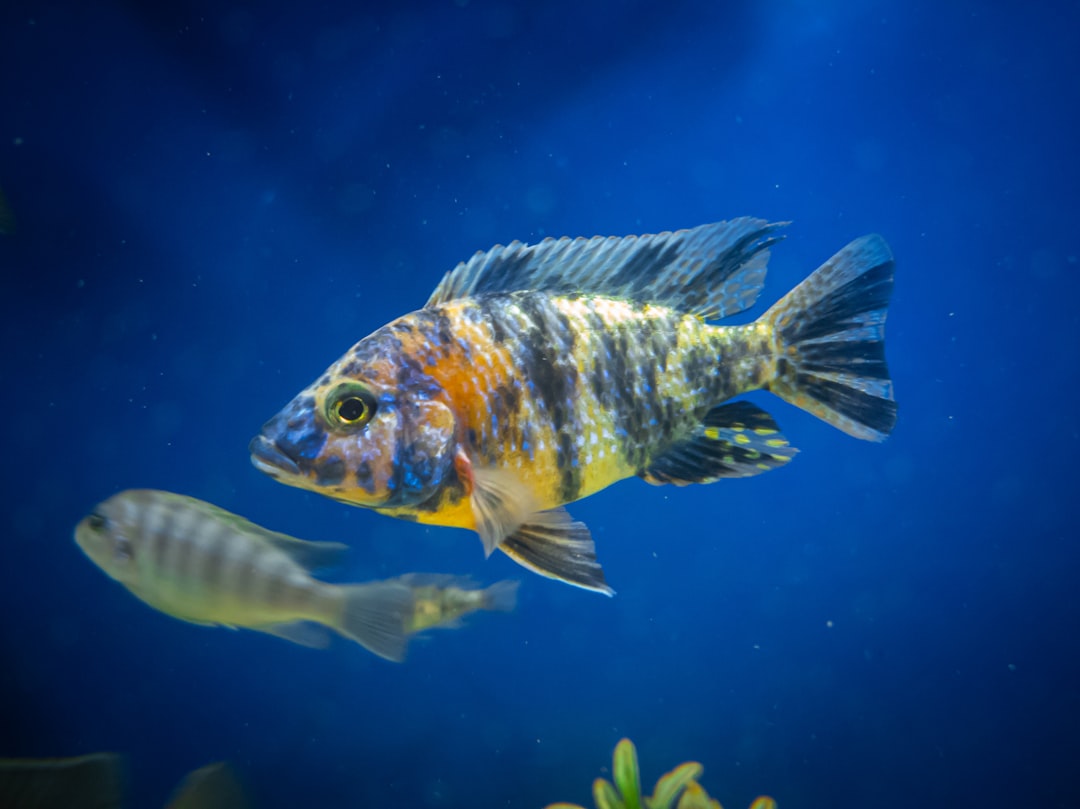
- Oscars (grow to 40cm, need 300L+, redecorate the tank daily)
- Jack Dempseys (aggressive, need large tank)
- Green terrors (aggressive at maturity)
- Red devils, Midas cichlids (aggressive, huge)
- Common convict cichlids (breed constantly, aggressive with tank mates)
None of these should be marketed as beginner fish. Yet all are found in UK shops labelled “medium difficulty.”
Beginner-appropriate cichlids share these traits:
- Under 12 cm adult — fits in a 100L tank
- Peaceful outside breeding — tolerates community tank mates
- Widely available in UK — no wild-caught rarities
- Tolerates UK tap water — no discus-level pickiness
Our top picks at a glance
- Best community cichlid overall: German blue ram (Mikrogeophagus ramirezi)
- Best hardy option: Kribensis (Pelvicachromis pulcher)
- Best small nano cichlid: Bolivian ram (Mikrogeophagus altispinosus)
- Best for hard water: Cockatoo dwarf cichlid (Apistogramma cacatuoides)
- Best breeder-friendly: Kribensis
- Best pair-forming species: German blue rams
Detailed picks
1. German blue ram (Mikrogeophagus ramirezi)
- Adult size: 5–7 cm
- Tank size: 60L for a pair, 90L for a small group
- Water: 25–28°C (warm), pH 6.0–7.0 (soft/acidic), soft water
- UK price: £12–£18 per pair
- Community? Yes, with soft-water tetras, corys, otos
The gold standard of community cichlids. Small, stunning colours (blue-yellow with a black spot behind the eye), form pair bonds, breed readily in home tanks. Peaceful with tank mates that aren’t fry-eating tropical species.
Caveat: German blues are more delicate than most cichlids. They need warm water (27°C), soft slightly acidic, and mature tanks. Newly-set-up tanks lose them fast. Wait 3+ months after cycling before adding rams.
Tank mates: cardinal tetras, corydoras, otocinclus, rasboras, harlequins.
Full care and breeding: rams pair off naturally from a group of 4–6 juveniles. Once paired, they defend a small territory around a chosen flat surface (leaf, slate) and spawn readily. See our detailed care approach — similar setup to angelfish but scaled smaller.
2. Kribensis (Pelvicachromis pulcher)
- Adult size: 8–10 cm
- Tank size: 90L for a pair, 150L for a group
- Water: 22–27°C, pH 6.5–8.0 (huge tolerance), medium hardness
- UK price: £8–£12 each
- Community? Mostly yes, but territorial when breeding
The hardy beginner cichlid. West African (Niger delta), tolerates a wide range of water conditions, adapts to UK tap water without adjustment. Colours up beautifully — males red-purple with dark bands, females yellow-orange with a red belly.
Kribensis breed readily in a community tank. Once paired, they claim a small cave (a coconut shell with a hole cut works perfectly) and defend the surrounding territory aggressively. Fish that stray into their zone get chased; the rest of the tank is safe.
Tank mates: any tetras or rasboras, corydoras, small catfish. Avoid other bottom-dwelling cichlids (kribensis will kill rivals).
One-per-tank rule: don’t keep multiple kribensis pairs unless you have a very large tank with clear territorial boundaries.
3. Bolivian ram (Mikrogeophagus altispinosus)
- Adult size: 5–7 cm
- Tank size: 60L for a pair, 90L for a small group
- Water: 24–27°C, pH 6.5–7.5, soft to medium
- UK price: £8–£12 each
- Community? Excellent
The hardier cousin of the German blue ram. Slightly less colourful (silvery-gold with light markings vs the electric-blue of German blues) but much more tolerant of typical UK community-tank conditions.
For most UK beginners considering rams: buy Bolivian instead of German. Similar behaviour, similar breeding, dramatically higher survival rate.
Tank mates: as for German blue rams.
4. Cockatoo dwarf cichlid (Apistogramma cacatuoides)
- Adult size: 6–8 cm (males with extended dorsal fins)
- Tank size: 60L for a pair, 100L for a harem
- Water: 22–27°C, pH 6.0–7.5, soft to medium
- UK price: £10–£15 each
- Community? Yes with careful tank mate selection
The most-recommended dwarf cichlid for aquascape tanks. Males develop large extended dorsal fin rays that give them a “cockatoo crest.” Multiple colour morphs (orange, red, super red, gold, Trip R) selectively bred.
Interesting harem behaviour — one male with 2–3 females works well in a 100L+ tank. Each female claims a small territory around a cave.
Tank mates: small tetras, rasboras, corydoras. Avoid smaller aggressive fish that might interfere.
5. Kribensis close relatives — Pelvicachromis taeniatus
- Adult size: 7–9 cm
- Tank size: 90L for a pair
- Water: 22–27°C, pH 6.0–7.5, soft to medium
- UK price: £10–£15 each
- Community? Yes with careful tank mate selection
Similar to kribensis but harder to find in UK shops. Colouration varies by geographical form. Care essentially identical to kribensis.
6. Ram cichlid alternatives — apistogramma agassizii, apistogramma trifasciata
Various Apistogramma species. All similar care to cockatoo dwarf cichlid. Slight preferences for softer, more acidic water. Species-specific availability varies by shop.
Choosing between them
- First cichlid, community tank, UK soft water: Bolivian ram
- First cichlid, community tank, UK hard water: Kribensis
- Interested in breeding: Kribensis or German blue rams
- Nano-tank cichlid (60L community): Bolivian ram or a pair of German blue rams
- Aquascape aesthetic: Cockatoo dwarf cichlids for their showy fins
Common tank setup for beginner cichlids
Substrate: aquarium sand — cichlids dig, sharp gravel injures them.
Hardscape: aquarium bogwood or spider wood, plus ceramic caves or coconut shells for spawning.
Plants: hardy species. Java fern, Anubias, Cryptocorynes. Cichlids dig up delicate rooted plants.
Filter: external canister with gentle output. Fluval 107 or 207 works well. See our best aquarium filter UK guide.
Heater: Fluval E100 or E200 depending on tank size. See our heater guide.
Water chemistry: cycle the tank properly first — see our UK cycling guide. Then let the tank stabilise for at least 3 months before adding cichlids.
Tank mates to always avoid: small nano tetras (get eaten as fry), guppies (get harassed), bettas (territorial conflict), aggressive barbs.
What to avoid buying
- “Assorted cichlids” at big-box pet chains — random species mix, usually aggressive.
- Convict cichlids as beginner cichlids — despite the marketing, they breed constantly and out-compete everything else.
- Rainbow cichlids as community fish — grow larger and more aggressive than shops indicate.
- Any cichlid over 15 cm adult for a first cichlid tank.
- Angelfish as a “community cichlid” for beginners — see our angelfish guide for reality.
Bottom line
For a UK aquarist wanting to try cichlids for the first time: Bolivian ram (soft water areas) or kribensis (hard water areas). Both are hardy, colourful, small enough for a 90L community tank, and safe with sensible tank mates.
Skip the marketing hype about oscars, jack dempseys, and other large aggressive species. Come back to those after you’ve kept dwarf cichlids for a year.
Frequently asked questions
What is the best cichlid for beginners?
Bolivian rams (for soft water) and kribensis (for hard water) are the best beginner cichlids — small, relatively peaceful, and tolerant of typical UK tap water.
What cichlids should beginners avoid?
Oscars, jack dempseys, green terrors, red devils and common convicts. They grow large (up to 40 cm), are aggressive, and need very large tanks.
Can cichlids live in a community tank?
Dwarf cichlids like rams and kribensis can, with tetras, corydoras and other peaceful fish. They become territorial when breeding but are otherwise community-safe.
Related: best aquarium fish for UK beginners (broader community options), angelfish care (larger cichlid step-up), how to lower pH in an aquarium, best aquarium plants UK (cichlid-safe plants).
— Jaqline Smalling, FishForever
Leave a Reply