
Cleaning a fish tank is not a deep-scrub-and-restart affair. Done properly, it’s a 20-minute weekly job that keeps water crystal clear, fish healthy, and disease at bay. Done badly (or not at all), it kills fish, crashes bacterial colonies, and creates the problems most beginners spend months chasing.
This guide is the exact routine we’d use on a UK community tank. Weekly, monthly, and once-a-year. What to do, what NOT to do, and why.
This article contains affiliate links. If you buy through one of them, FishForever earns a small commission at no cost to you. We only recommend products we’d use ourselves. See our Affiliate Disclosure.
- Weekly maintenance is a 20-minute job: 25% water change, gravel vacuum, glass wipe, and a water test.
- Never use household cleaners, and never rinse filter media in tap water — chlorine kills the bacterial colony.
- Never do a 100% water change; the maximum is 50% even when resetting a problem tank.
- A 'clean' tank is not sterile — the goal is removing waste while preserving beneficial bacteria.
The one thing to understand first
A “clean” aquarium is not a sterile one. The beneficial bacteria you spent weeks cycling live on your filter media, gravel, and decor surfaces. Scrubbing everything spotless kills the bacteria and forces the tank to re-cycle with fish in it — the exact scenario that kills them.
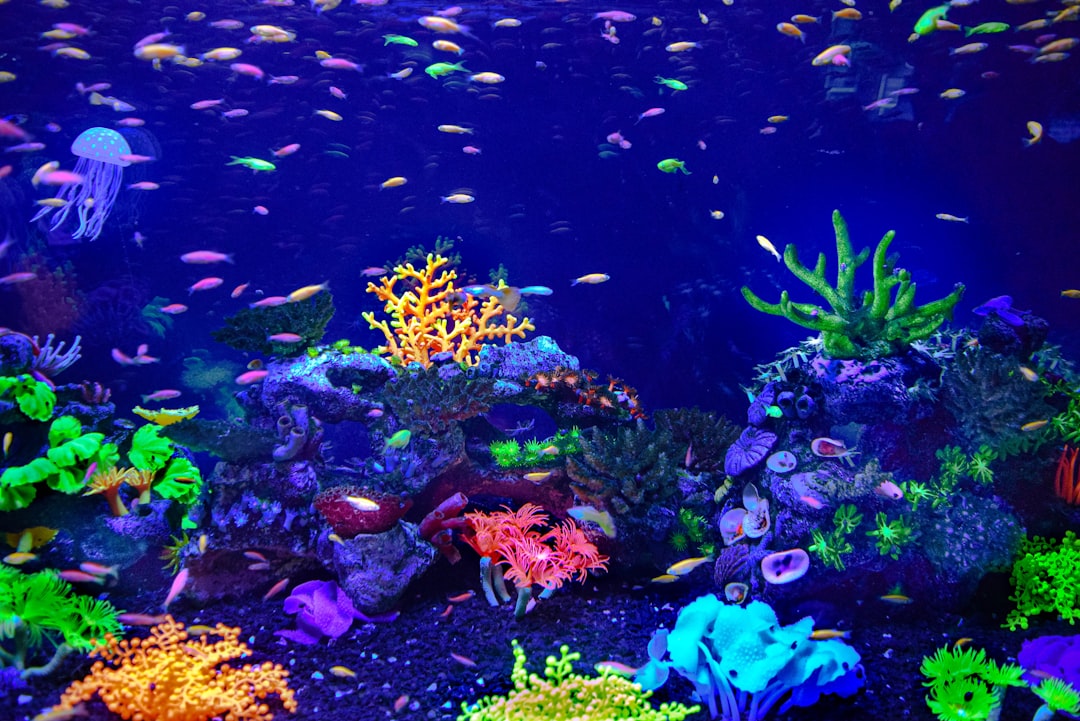
So aquarium maintenance is about removing waste (uneaten food, decaying leaves, fish waste, algae blooms) while preserving the invisible bacterial ecosystem that keeps ammonia at zero.
That single distinction runs through every step below.
Weekly routine (20 minutes)
Do this once a week. Every week. Skipping is what kills fish over time.
Kit you need
- Aquarium gravel vacuum with hand pump — £8–£15
- Bucket (dedicated to aquarium use only — never mixed with detergent buckets)
- Aquarium magnet cleaner or algae scraper — £8–£15
- Seachem Prime dechlorinator or your preferred water conditioner
- API Freshwater Master Test Kit — for the pre-change test
- Kitchen roll or clean lint-free cloth
Step 1 — Wipe the glass (5 minutes)
Use an aquarium magnet cleaner or aquascape algae scraper to wipe algae off the front and side glass. Skip the back wall — the algae there is a nitrate sink and food for algae-eating tank mates.
Never use household glass cleaner (Windex, Mr Muscle). Chemical residue on the outer glass leaches into water via evaporation and condensation and poisons fish. A clean damp microfibre cloth for the outside is enough.
Step 2 — Test water (2 minutes)
Before the water change, test:
- Ammonia: should be 0
- Nitrite: should be 0
- Nitrate: aim for under 40 ppm
If ammonia or nitrite are above 0, something is wrong — read our cycling guide, you may not be truly cycled or you’ve had a bacterial die-off. Do a 50% water change instead of the usual 25% and investigate.
If nitrate is over 60 ppm, do a 40% change instead of 25% and read our nitrate reduction guide.
Step 3 — Siphon out water while vacuuming substrate (10 minutes)
The gravel vacuum does both jobs at once. Push the wide end down into the gravel; sediment and waste get sucked up while heavier gravel falls back. Move the vacuum systematically across the substrate.
Rules:
- Remove about 25% of tank volume per week. Mark the vacuum bucket with tape at 25% level so you don’t guess.
- Vacuum all of the visible substrate over each session. If tank is large, do half one week and half the next.
- Pay extra attention to corners, under decor, and along the front glass — where waste settles.
- Don’t disturb the plants’ roots. Vacuum around, not through.
Step 4 — Refill (5 minutes)
- Fill your bucket with lukewarm tap water matching tank temperature (feel with your hand; slight warm to touch is right for tropical).
- Dechlorinate the bucket first — dose Seachem Prime for the volume you’re adding. Wait 30 seconds.
- Pour slowly into the tank. Direct the flow onto a plate or piece of decor to avoid stirring up substrate.
- Never pour cold tap water directly in — thermal shock stresses fish.
Step 5 — Quick fish check
While the tank re-settles, look at every fish:
- All accounted for?
- Any behaving unusually (hiding, clamped fins, at the surface gasping)?
- Any visible signs of disease? (White spots = ich; ragged fins = fin rot)
Address concerns immediately.
Monthly routine (30 minutes, added to weekly)
Once per month, in addition to the weekly:
Rinse filter media (in old tank water)
- Turn filter off. Remove media (sponges, ceramic rings, floss).
- Rinse in a bucket of the tank water you just siphoned out. Never rinse in tap water — chlorine kills the bacterial colony and effectively un-cycles your tank.
- Squeeze sponges vigorously in the tank water; rinse ceramic media by swishing.
- Replace floss/polishing pad if it’s clogged or ripped (this is the only media that “wears out” — sponges and ceramic last years).
- Reassemble filter, restart.
Trim plants
Remove yellowing, dying, or overgrown leaves and stems. Prune floating plants (Amazon frogbit) if they’re covering more than 50% of the surface. See our plants guide for species-specific care.
Clean external glass
Front, sides, and top of tank exterior — dust and hard-water deposits build up. Damp microfibre cloth; no household chemicals.
Check equipment
- Heater — is it holding target temperature? Test with a digital thermometer.
- Filter — is water flow normal? Slow flow means clogged intake or impeller.
- Lights — timer working correctly? LEDs failing?
Annual routine
Once a year (or when moving house):
- Replace floss/polishing pads in the filter (if you’re still using the originals).
- Deep-clean the tank exterior including behind and underneath if accessible.
- Replace airline tubing if in use — it goes brittle after 12–18 months.
- Reconsider layout — if plants have outgrown the space or fish stocking has changed, this is when to rescape.
What NOT to do
- Never scrub the tank with soap or household cleaners. Residue kills fish. Aquarium magnet + clean water is enough.
- Never do 100% water changes. Even a “reset” of a problem tank should max out at 50% in one session. Full changes crash beneficial bacteria and destroy the cycle.
- Never rinse filter media in tap water. Chlorine kills the bacterial colony in seconds.
- Never remove and clean ALL filter media at once. Even in tank water, swap only half at a time so the surviving bacteria repopulate.
- Never do a “deep gravel clean” in an established tank. Removes beneficial bacteria colonies from substrate. Vacuum surface debris only; leave the ecosystem below alone.
- Never move fish for a “clean.” Removing fish is stressful. Everything you need to clean can be done with fish in the tank.
- Never leave uneaten food. Rots into ammonia. Feed only what fish clear in 2 minutes.
- Never use kitchen sponges or cloths that have touched soap. Detergent residue is fatal.
Troubleshooting cleaning-related problems
Water still cloudy after cleaning
Usually a bacterial bloom. See our cloudy water guide. Don’t panic; don’t do more water changes; it resolves itself.
Fish stressed after water change
Temperature mismatch, chlorine wasn’t fully neutralised, or pH swing from tap water. Match temperature more carefully next time, use adequate dechlorinator, and if your area’s tap water has very different pH from tank water, consider mixing with RO water.
Algae keeps returning fast
Underlying problem: too much light, too much nutrient. See our algae guide for the type-by-type fix.
Nitrate stays high despite water changes
Either overstocked, overfed, or your tap water is already high in nitrate. See our nitrate reduction guide.
The invisible bit — feeding matters more than cleaning
Most water quality problems trace back to overfeeding, not under-cleaning. A properly-fed tank stays clean for weeks between maintenance; an overfed tank produces waste faster than the cycle can handle.
The rule: only what fish clear in 2 minutes, twice a day maximum. Fasting one day per week is genuinely healthy.
Overfeeding is not affection; underfeeding is not cruelty. Wild tropical fish eat when food is available and starve for days at a time — that’s their normal.
A note on “no-water-change” tanks
You’ll see aquarists claiming they never do water changes on heavily-planted tanks with anaerobic denitrifying zones. This is real — advanced planted tanks with deep substrate, dense plant mass, and low stocking can maintain nitrate below 10 ppm indefinitely without water changes.
It’s not a beginner setup, and it requires 6–12 months of careful development before it self-stabilises. Don’t skip water changes on a normal community tank because you read about no-water-change tanks online — you’ll poison your fish.
Bottom line
Weekly: 25% water change + gravel vacuum + magnet-wipe front glass + water test. 20 minutes.
Monthly: rinse filter media in old tank water + trim plants + external clean.
Never use household chemicals. Never rinse filter media in tap water. Never do 100% changes.
Kit list total: gravel vacuum + magnet cleaner + dechlorinator + test kit + a dedicated bucket = about £50. Buy once, use forever.
Frequently asked questions
How often should I clean my fish tank?
Do a 25% water change with a gravel vacuum weekly, and rinse filter media in old tank water monthly. Consistent small maintenance beats occasional deep cleans.
Can I clean my fish tank with soap?
Never. Soap and household cleaners leave residues that are fatal to fish. Use an aquarium magnet and plain water for glass, and old tank water for filter media.
Should I remove my fish when cleaning the tank?
No. Removing fish is stressful and unnecessary. All routine cleaning — water changes, gravel vacuuming, glass wiping — is done with the fish in the tank.
Related: how to lower nitrate in a fish tank, why is my fish tank cloudy, how to cycle a fish tank, best aquarium plants for UK beginners (plants reduce cleaning frequency).
— Jaqline Smalling, FishForever
Leave a Reply