
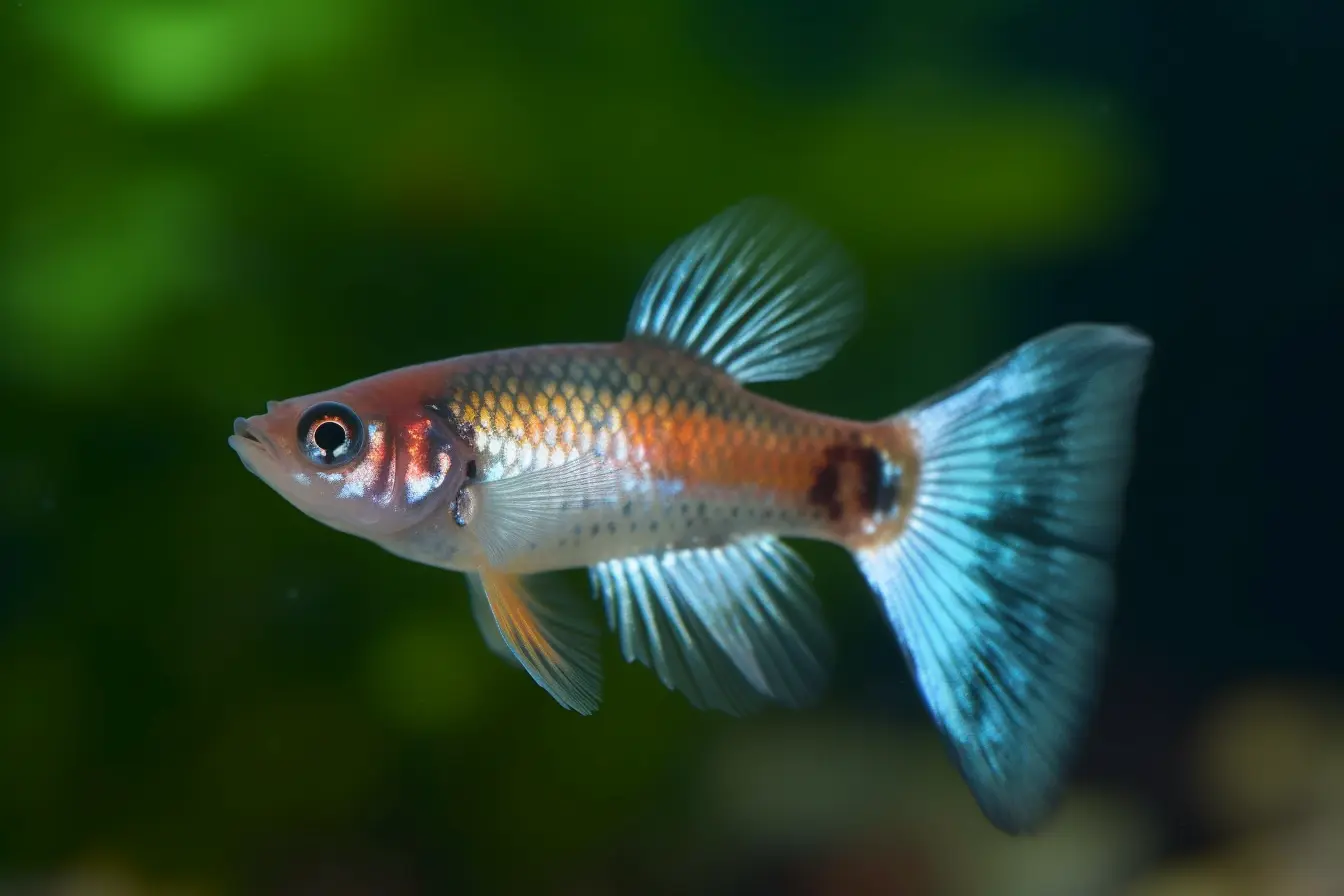
Livebearers are how most of us got into the hobby. You buy a few guppies for a 60-litre starter tank, follow the cycling guide, and three weeks later you’ve got fry hiding in the plants without ever having intended to breed anything. Mollies and platies do the same thing.
That’s the easy bit. The slightly less easy bit — actually raising those fry to a healthy adult size, deciding what to do with them, and not ending up with 200 fish in a tank meant for 15 — is where this guide comes in.
This article contains affiliate links. If you buy through one of them, FishForever earns a small commission at no cost to you. We only recommend products we’d use ourselves. See our Affiliate Disclosure.
Why livebearers are good first breeders
Three reasons. They give birth to free-swimming fry instead of laying eggs, so you skip the hardest part of fish breeding (keeping the eggs alive). They’re cheap and forgiving — if a batch doesn’t make it, the next one is along in three weeks. And there’s an existing UK market for them at most independent aquatic shops, which means surplus fry don’t have to become a moral problem.
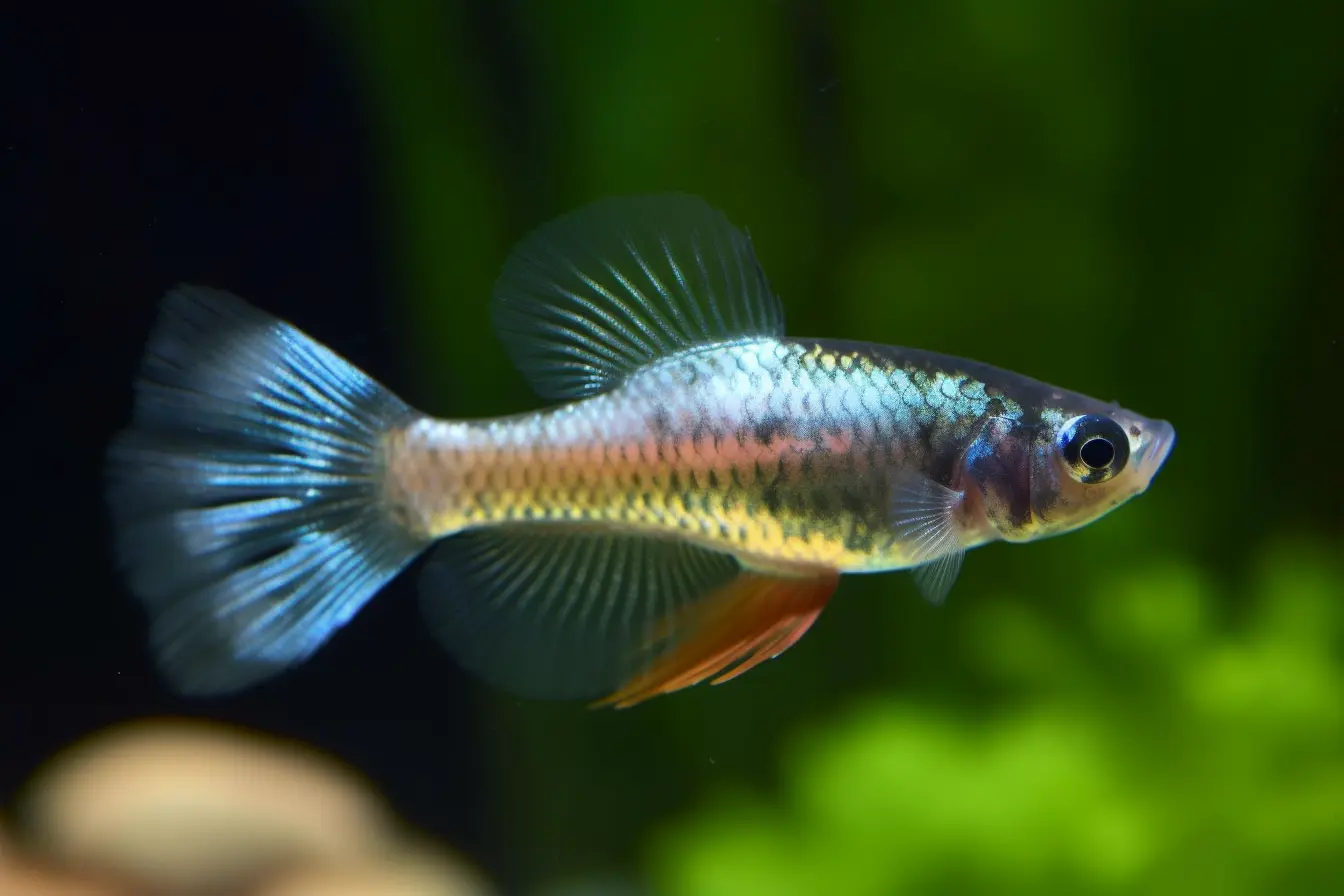
The downside: modern strain guppies, mollies and platies are not as hardy as their ancestors. Decades of selective breeding for colour and finnage have produced fish that are sensitive to water-quality swings, prone to fin rot, and short-lived (1–2 years instead of 3–5). Buy from breeders or independent shops where the parent stock looks active, alert, and not artificially neon. Big-box pet shop livebearers are usually fine in the short term but shouldn’t be your starting genetics if you want to actually breed for quality.
Sexing — how to tell who’s who
The single most reliable indicator is the anal fin. In males, it’s modified into a thin, pointed rod called a gonopodium — used for internal fertilisation. In females it’s a normal fan-shaped fin. This shows up clearly by 6–8 weeks of age in guppies, slightly later in mollies and platies.
Other clues:
- Size. In all three species the female grows larger than the male.
- Colour. Males are usually more vivid, with longer fins. Females are duller and rounder. (Some modern strains break this — fancy female guppies can be very colourful.)
- Body shape. Females have a deeper, broader belly. Males look slimmer from above.
Stocking ratio matters. 2 females to 1 male is the standard recommendation, because males harass females constantly, and a single female with a single male will be exhausted within weeks. If you’re not actively trying to breed, all males is a viable option — boy tanks of fancy guppies are spectacular and avoid the population problem entirely.
Spotting pregnancy
A guppy female will show a gravid spot — a darkening patch behind the anal fin that intensifies over the three to four weeks of gestation. By the last week you can sometimes see individual eyespots through the spot if the light is right. She’ll square off in profile and look noticeably box-shaped from above.
Platies and mollies are harder. Their bodies are deeper to start with, so “gravid” looks like “well fed” until the last few days. The clearest signal is behavioural — a near-term female hangs near the heater, hovers in one spot, becomes less interested in food, and may chase other fish away from her chosen corner. That’s birth coming within 24–48 hours.
Gestation runs 21–35 days depending on temperature, with 28 days as a typical guppy cycle. Mollies tend to be on the longer end (28–40 days). Females can store sperm and produce a fresh batch every cycle for up to six months from a single mating, which is why a “single” female added to a tank still produces fry.
To breeder net or not?
This is the big choice. You have three options:
- Let it happen in the main tank. Fry hide in dense plants (Java moss is the classic) and the survivors are the strongest. You lose 60–90% of any given batch to predation, including by their own mother. This is fine if you only want a few replacements and don’t want a fish farm.
- Mesh breeder net inside the main tank. A soft mesh net is suspended in the corner. You move the heavily-pregnant female in, she gives birth, you remove her after, the fry stay protected. Mesh is much better than the rigid plastic ones — those are stressful, smaller, and water doesn’t flow through properly. Marina makes a good cheap mesh one (£6–£8 on Amazon UK or any UK aquatic shop).
- Separate fry tank. A bare-bottom 25–40 litre tank, sponge filter, single heater, water borrowed from the main tank for instant cycling. Move the female in a few days before due, return her after birth, raise fry to size. Highest survival rate, most reliable genetics, most work.
For most UK hobbyists working from a single starter tank, option 2 — the mesh breeder net — is the right balance. Keep one in a cupboard for when you need it.
Aiding the birth
You probably don’t need to. Healthy livebearers give birth fine on their own. Things to check:
- Water quality. Test ammonia, nitrite, nitrate. Anything other than 0/0/<40 ppm and you should do a 25% water change before stressing the female further. (See our cycling guide if you’re unsure on testing.)
- Temperature. 24–26 °C is comfortable. Higher temperatures speed birth slightly but also raise fish stress.
- Quiet. Don’t move tank decor. Don’t tap the glass. Resist the urge to watch closely with the room lights on — most births happen at dawn or in the middle of the night.
If birth stalls (the female has been hovering and looking gravid for over a week past the expected date, or starts dropping fry but stops part-way), it’s usually water quality. A 20% water change and a couple of days of patience generally fixes it. If she’s clearly straining and producing nothing, that’s a malposition and there’s not much a hobbyist can do — the outcome is usually that you lose the female and the batch.
Raising the fry
Newborn livebearers are tiny but already fully formed swimmers. Day one they want food.
Days 1–14:
- Crushed flake food, ground between two spoons, three to five small feeds a day.
- Live or frozen baby brine shrimp (Artemia nauplii) — the gold standard for fry growth. UK aquatic shops sell hatching kits for £15–£25 and decapsulated cysts that hatch in 24 hours.
- Powdered fry food (Hikari First Bites, Sera Micron) is a fine convenience option if you can’t be bothered with brine shrimp.
- Daily 20% water changes. Match temperature, dechlorinate. Fry are extremely sensitive to ammonia.
Days 14–60:
- Switch to standard fry pellets and continue with brine shrimp.
- Begin adding microworms or grindal worms if you can source them — protein variety helps colour.
- Move to weekly 30% water changes once the tank stabilises.
- If you’re using a separate fry tank, by week six you can start moving the largest fry to the main tank — they’ll be too big to be eaten.
Months 2–4:
- Fry reach 2–3 cm. Sex becomes obvious. Start separating males and females if you want to control colour breeding.
- Begin feeding adult food alongside fry food — eventually phase fry food out.
What to do with the surplus
Most UK independent aquatic shops will take healthy fry once they’re 2–3 cm and clearly sexable, in exchange for either store credit or a small amount of cash. Phone first and ask — etiquette varies. They’ll generally want fry that look healthy, are eating well, and aren’t too closely related to their existing breeding stock.
Other options:
- Local fishkeeping forums and Facebook groups. UK Aquatic Plant Society and various regional groups have classified threads. Free or cost-of-bag-and-water transactions, in person.
- Aquarist auctions and clubs. The Federation of British Aquatic Societies (fbas.co.uk) lists local clubs. Many run monthly auctions.
- Friends with tanks. Quick and easy, builds the hobby socially.
What we’d discourage:
- Selling on the internet to strangers for shipping. UK courier networks are not aquarium-fish-friendly and the welfare implications are awkward.
- Releasing into the wild — illegal in the UK (Wildlife and Countryside Act 1981) and ecologically damaging even if you think the fish “won’t survive winter”.
- Letting populations explode. Six female guppies in a 60-litre tank can become 80 fish in 90 days. Plan ahead.
A note on inbreeding
If you’re letting a single line of livebearers reproduce continuously, expect quality to decline within 3–4 generations. Fins shrink, colours mute, deformities appear. This is true even of fancy strains.
The fix is straightforward: every 2–3 generations, swap a male or two with another breeder or buy fresh stock from a reputable source. Even a single fresh male introduced into a closed line resets the genetic diversity for several generations.
A short word on mollies specifically
Mollies are slightly different and deserve a flag. They prefer harder, more alkaline water than guppies and platies — pH 7.5–8.4 is ideal — and many strains do better with a small amount of marine salt added (about 1 teaspoon per 4 litres). They also grow much larger than guppies (up to 12 cm for some strains) so a “molly tank” really wants to be 90 litres or more, not 40. If your water is naturally soft and you’ve been losing mollies for unclear reasons, water hardness is the most likely culprit — not disease.
Products mentioned in this article
Amazon UK links. Prices and stock change; we recommend checking a couple of independent UK aquatic shops for comparison before buying.
Just starting your tank? Cycle it first — see our UK fishless cycling guide. Looking for the rest of your stocking? Read the best aquarium fish for UK beginners. Need to know your tank’s true water volume? Use our volume calculator.
— FishForever Editors
Leave a Reply