
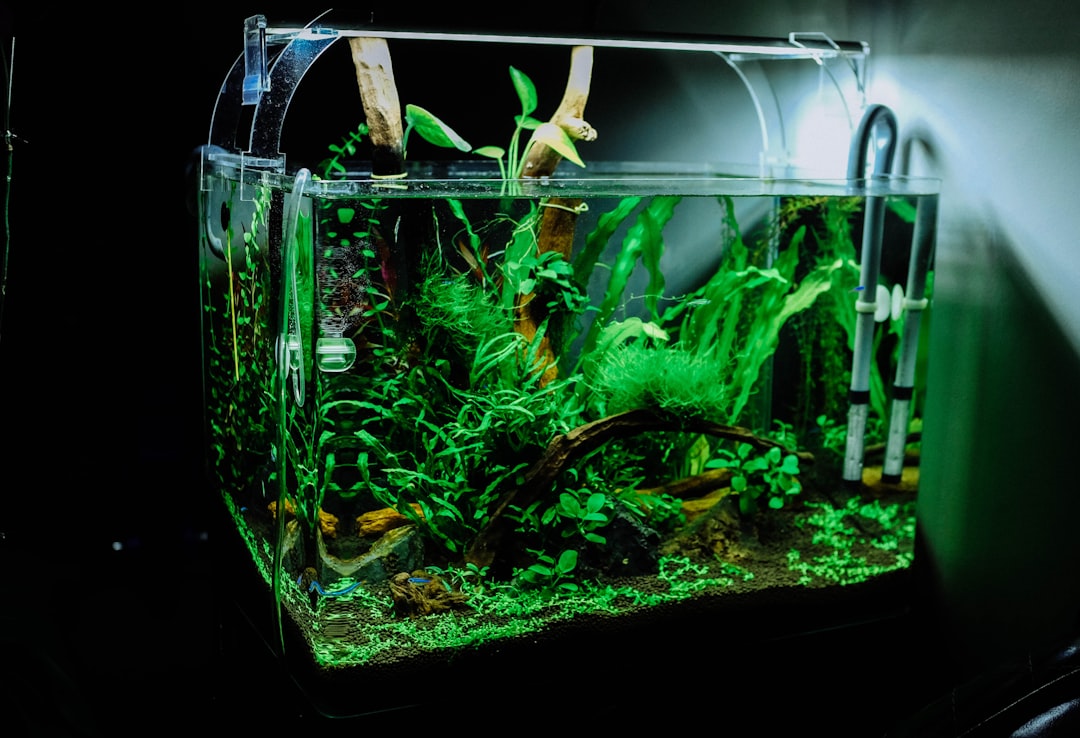
Your tank tests clean for ammonia and nitrite — good. Then you test nitrate and it’s 80 ppm, or 120, or off the chart. That’s the final step of the nitrogen cycle, and it’s the number most UK aquarists ignore until fish start dying without obvious cause.
High nitrate doesn’t kill fish quickly like ammonia does. It suppresses immune systems, slows growth, dulls colour, blocks breeding, and shortens lifespan. Fish in 80 ppm nitrate for months don’t drop dead — they just fail to thrive and die younger than they should.
This guide covers what nitrate actually is, why UK tanks tend to accumulate it, and the six methods that reliably reduce it. Plus what NOT to do.
This article contains affiliate links. If you buy through one of them, FishForever earns a small commission at no cost to you. We only recommend products we’d use ourselves. See our Affiliate Disclosure.
What nitrate is (in one paragraph)
Fish produce ammonia. Beneficial bacteria in your filter convert ammonia to nitrite, then nitrite to nitrate. Nitrate is the end product. It’s far less toxic than the other two — but it still accumulates in the tank and needs to be removed either by water changes, plants, or specialised media. Understanding this is Step 1; if that’s confusing, our cycling guide covers the full nitrogen cycle from scratch.

What’s a healthy nitrate level?
- Under 20 ppm: ideal. Most sensitive species (discus, cardinals, cherry shrimp, wild-caught fish) want this.
- 20–40 ppm: acceptable for hardy community fish. Weekly water changes should keep you here.
- 40–80 ppm: stressful. Fish survive but immune systems suppressed, breeding stops, colours dulled.
- 80+ ppm: actively harmful. Long-term causes disease, deformity, and premature death.
- 160+ ppm: dangerous. Sensitive species die within weeks.
Test weekly with an API Freshwater Master Test Kit. The nitrate test in particular needs vigorous shaking of Bottle #2 for 30 seconds and vigorous shaking of the sample tube for another 60 seconds — undershaking gives false-low readings and is the single most common test error.
Why nitrate accumulates
In a functioning cycle, nitrate is the end of the line. Nothing in a standard aquarium removes it except:
- Water changes (dilution)
- Live plants (absorbed as fertiliser)
- Anaerobic bacteria (denitrifiers) — only present in very deep substrate or specialised media
Without one of those actively working, nitrate rises every day. In a well-planted moderately-stocked tank it rises slowly (5 ppm/week). In a heavily-stocked bare tank it can rise 20+ ppm per week.
The most common causes of persistently high nitrate:
- Under-changing water. The default fix — see method 1 below.
- Overstocking. Too many fish producing too much waste.
- Overfeeding. Uneaten food rots to ammonia, becomes nitrate.
- Not enough live plants to absorb nitrogen.
- Tap water already high in nitrate. UK tap water in agricultural areas (East Anglia, parts of the Midlands) can be 20–50 ppm nitrate before you even add it to the tank.
Method 1 — Water changes (the default, always works)
Best for: everyone, always. Combines with all other methods.
How it works: Simple dilution. Remove 25% of the tank water, replace with fresh dechlorinated water. Nitrate drops by ~25% instantly.
Practical protocol:
- Weekly 25% change for a normally-stocked tank. Test before and after.
- Twice-weekly 25% if nitrate stays above 40 ppm despite weekly changes.
- 50% single change if nitrate is over 80 ppm and you need to bring it down urgently. Match temperature, dechlorinate.
- Never change more than 50% in one session — pH swings from tap water can stress fish.
Kit needed:
- Aquarium gravel vacuum with hand pump — £10
- Seachem Prime dechlorinator — dose at 5x rate during high-nitrate events; also detoxifies ammonia and nitrite briefly as a bonus
- Dedicated bucket for aquarium use only (no detergent contamination)
Water-change tips that actually matter:
- Vacuum the substrate thoroughly — trapped waste is where new nitrate comes from.
- Match temperature to within 1°C — feel water with your hand; if it feels the same as your bath running slightly warm, you’re close.
- Dechlorinate BEFORE adding to tank — dose the bucket, wait 30 seconds, then pour into the tank.
Method 2 — Live plants
Best for: medium and long-term maintenance. Feeds itself.
How it works: Plants use nitrate as nitrogen fertiliser. A well-planted tank consumes nitrate faster than fish produce it, in the ideal case, meaning water changes become almost optional.
Plants that consume nitrate fastest:
- Floating plants — the champions of nitrate removal. Amazon frogbit, water sprite, hornwort (as a floating plant), duckweed. Roots dangle in water absorbing nitrate directly.
- Fast-growing stem plants — hornwort, hygrophila, ludwigia, rotala.
- Vallisneria — root plant, tall background, hungry feeder.
- Anacharis (Elodea) — Elodea aquarium plant. Vigorous grower, easy to obtain in UK, cheap.
What to do:
- Add 5–10 fast-growing stems to a struggling tank; a good bunch is £8–£15.
- Prune weekly. Growing plants absorb nitrate; not growing plants don’t.
- Keep the water flowing to plant roots (don’t let dead spots develop).
- Give plants adequate light — a decent aquarium LED for 6–8 hours daily.
One caveat: plants absorb nitrate as a plant, but decomposing dead leaves put it back. Prune, don’t let dying plants sit.
Method 3 — Reduce stocking or feeding
Best for: long-term structural fix.
If nitrate persistently exceeds 40 ppm despite weekly water changes, the tank is either overstocked or overfed. Both are fixable.
Stocking check:
- Rough guide: 1 cm of adult fish per litre for community fish. A 100L tank comfortably holds ~15 tetras or ~8 corydoras or ~6 medium livebearers plus a couple of bottom-feeders.
- Messy species (goldfish, plecs, oscars) count for 3–5× their length in bioload. A single goldfish “counts as” 20cm of tetras.
- If overstocked: either upgrade tank size, or rehome fish. Sell/give to independent aquatic shops.
Feeding check:
- Feed only what fish clear in 2 minutes, twice a day maximum.
- Sinking food for bottom-feeders is fed separately and lightly.
- One fasting day per week is genuinely healthy, not cruel.
Cutting feeding by 30% often drops chronic nitrate accumulation by half within a fortnight.
Method 4 — RO or mixed water for water changes
Best for: tap water high in nitrate; advanced UK aquarists.
If your tap water tests over 20 ppm nitrate (common in agricultural UK regions), you’re topping the tank up with the same problem you’re trying to reduce.
Options:
- Home reverse osmosis unit: aquarium RO unit — £80–£200 one-time cost. Produces near-zero-nitrate water on demand. Mix 50/50 with tap water for water changes; nitrate content halves.
- Buy RO water from UK aquatic shops — 30–50p per litre. Fine for occasional use; expensive for weekly changes.
- Re-mineralise RO with a controlled dose of Salty Shrimp GH+ or Seachem Equilibrium to hit your target GH before use.
Test your tap water: fill a bucket, let stand 24 hours (to remove CO2 and chlorine effects), test nitrate. If it’s over 20 ppm, RO mixing is worth considering.
Method 5 — Nitrate-absorbing filter media
Best for: emergency reductions and specific circumstances.
Various products claim to remove nitrate. Reality: some work, most work poorly, none replace water changes.
Products worth using:
- Seachem Purigen — a synthetic resin that removes organic waste before it becomes nitrate. Not strictly a nitrate remover but reduces the load reaching the nitrification cycle. Regenerable (soak in bleach solution monthly). £15 for a bag that treats 250L; lasts about 6 months per pack.
- **Seachem MatrixCarbon or Seachem De*Nitrate** — passive nitrate media. Only works with very slow water flow (which most filters can’t achieve). Not usually worth the effort.
Products with limited effect:
- Zeolite — absorbs ammonia (not nitrate), briefly. Not a nitrate solution.
- “Nitrate removers” in a bottle — chemically neutralise a very small amount of nitrate. Not a substitute for water changes.
Products to avoid:
- Vodka dosing / carbon dosing — advanced marine technique that’s dangerous for freshwater beginners. Skip.
Method 6 — Deep substrate + slow flow (anaerobic zones)
Best for: highly advanced setups; not for beginners.
In a substrate deeper than 8cm with minimal water flow through it, anaerobic bacteria develop that consume nitrate directly (denitrification). This is real and works — it’s how planted-tank aquascapers eventually get away with monthly rather than weekly water changes.
Downside: sulphide gas production if the substrate is disturbed or goes wrong. Requires malaysian trumpet snails or corydoras to keep the substrate lightly turned. Advanced, high-effort. Skip until you’re comfortable with everything else.
What NOT to do
- Don’t add “nitrate reducing” products as a substitute for water changes. Most are placebo.
- Don’t cut water changes because you have plants. Plants slow nitrate rise; they don’t remove nitrate as fast as fish produce it in most stocked tanks.
- Don’t dose massive water changes to correct high nitrate in one go. A 50% change is the maximum in one session; do repeated 30% changes daily if you need to bring nitrate down from 100+ ppm to under 20.
- Don’t panic. Chronic 60 ppm nitrate is a “reduce over 2 weeks” problem, not an emergency. Sudden 200+ ppm is different — that’s an emergency water change situation.
The whole picture
Nitrate is the trailing indicator of aquarium health. Low nitrate = well-run tank; high nitrate = something needs attention. It’s normal for it to creep up between water changes and normal for it to fall after each change. The graph should oscillate between ~10 ppm (just after change) and ~30 ppm (just before change), with a stable pattern.
If nitrate keeps climbing above 40 ppm each week despite water changes, you have one of: overstocking, overfeeding, insufficient plants, or nitrate-loaded tap water. Fix the underlying cause and the nitrate takes care of itself.
Bottom line
Water changes remove nitrate. Nothing else consistently does, unless you have a heavily-planted tank.
Get an API Freshwater Master Test Kit, test weekly, shake bottle #2 vigorously, aim for under 40 ppm. Add live plants to reduce ongoing accumulation. Test tap water; consider RO mixing if it’s over 20 ppm.
Reduce feeding, reduce stocking, do bigger water changes. The whole hobby rewards these three moves — and nitrate is where you’ll see the reward first.
Related: how to cycle a fish tank, why is my fish tank cloudy, how to lower pH in an aquarium, what temperature should a tropical fish tank be.
— Jaqline Smalling, FishForever
Leave a Reply