
Corydoras are the second-easiest fish to breed in a home aquarium (after livebearers and cherry shrimp). If you have a mature, well-fed group of a compatible species and you understand the “cool water = rainy season = spawn now” trigger, corydoras breed reliably in home tanks with minimal intervention.
This guide covers the honest UK-focused version — species selection, setup, the trigger, and raising fry to sale size.
This article contains affiliate links. If you buy through one of them, FishForever earns a small commission at no cost to you. We only recommend products we’d use ourselves. See our Affiliate Disclosure.
- Peppered and bronze corydoras are the easiest species to breed — condition a group of six on frozen food, then trigger spawning with a cool water change.
- They need soft sand substrate to protect their barbels.
- Move eggs to a bare hatching tank with methylene blue to prevent fungus and predation.
- Fry hatch in 3–5 days and reach sale size in about three months.
Which corydoras breed easily
Not all corydoras are equally beginner-friendly to breed. Ranked by ease:
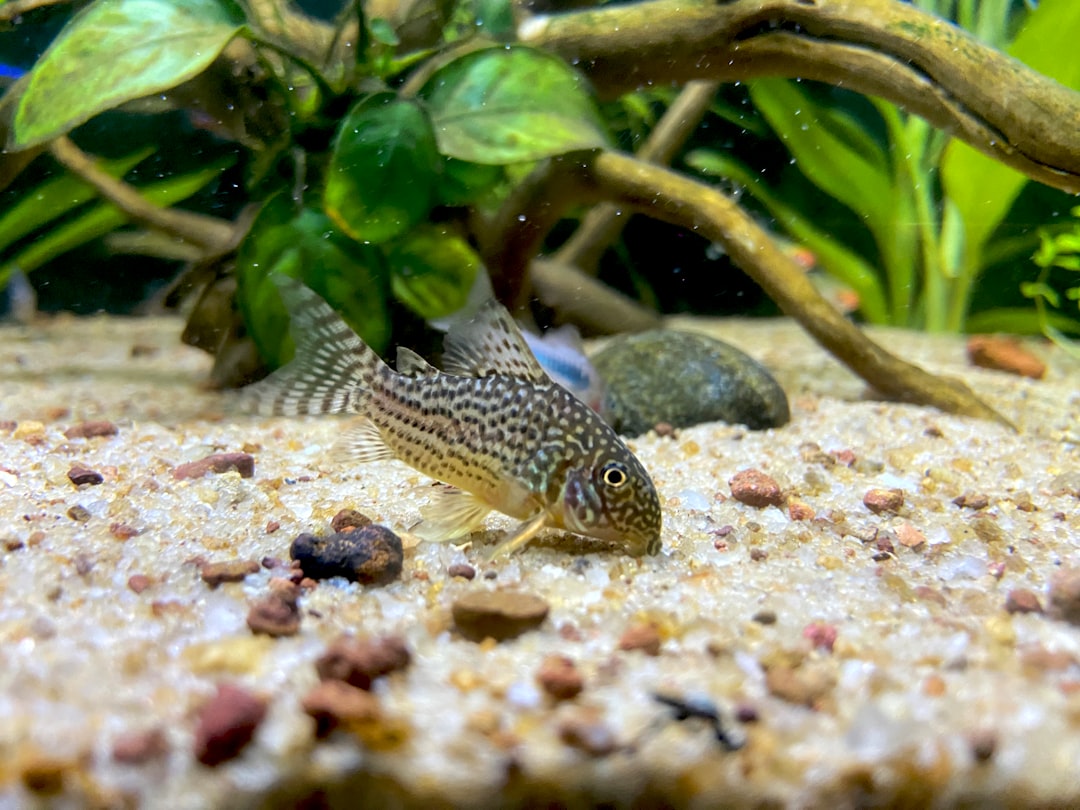
- Peppered corydoras (C. paleatus) — the classic beginner breeder. Genuinely easy.
- Bronze corydoras (C. aeneus) — nearly as easy.
- Albino corydoras (colour morph of bronze) — same difficulty as bronze.
- Sterbai corydoras (C. sterbai) — moderate; higher temperature preference.
- Panda corydoras (C. panda) — moderate to hard; more sensitive.
- Julii / Trilineatus corydoras — moderate; often mis-identified.
- Pygmy corydoras (C. pygmaeus) — different behaviour; breed in smaller tanks but fry harder to raise.
Wild-caught species (adolfoi, weitzmani, elegans) are much harder to breed and typically require softer water and lower temperatures than UK tap.
Start with peppered or bronze. Get the process working, then try more challenging species.
Setup requirements
Group size
Corydoras need a group to feel safe. Breeding groups: at least 6 adults, ideally with a 2 males : 1 female ratio.
Males chase females during spawning; too few males = females not stimulated to spawn; too few females = females exhausted.
Tank size
- Minimum breeding tank: 60L
- Ideal: 90L
- Not in a community tank if you want to save fry — eggs and fry get eaten by everyone
You can breed in a community tank and save maybe 1–5% of eggs; a species-only tank saves 60–90%.
Substrate — must be soft
Corydoras have delicate barbels around their mouths. Sharp gravel wears these down over time, causing infections and reduced feeding ability. Use:
- Fine aquarium sand — silver, black, or natural
- Pool filter sand — cheap alternative
Never use crushed coral, sharp gravel, or “aquascape rocks” as substrate.
Water chemistry
Cycle the tank properly first — see our UK cycling guide.
Target parameters:
- Ammonia / Nitrite: 0 (always)
- Nitrate: under 20 ppm
- pH: 6.5–7.5 for peppered and bronze; 6.5–7.2 for sterbai
- Hardness: soft to medium (4–15 dGH)
- Baseline temperature: 24°C for peppered/bronze; 26°C for sterbai
UK tap water in most areas works. Hard-water areas may need Indian almond leaves to soften — see our how to lower pH guide.
Plants and decor
- Broad-leaf plants (Amazon sword, Anubias on wood) — spawning surfaces
- Dense plants (Java moss, hornwort) — fry hiding
- Fine spawning mops (bunched acrylic yarn) — some breeders use these
Conditioning for breeding
Feed heavily on high-protein food for 2 weeks before triggering spawn:
- Frozen bloodworm — 2× daily
- Frozen brine shrimp — 2× daily
- Sinking pellets as background
Females develop obviously rounded, “packed” bellies when carrying eggs. This is your visual cue that spawning is imminent.
The rainy season trigger
Wild corydoras spawn at the start of the rainy season — when cold rainwater floods streams, dropping water temperature and pH. Replicating this triggers captive spawning reliably.
The trigger protocol:
- Water in tank is at baseline temp (24–26°C), well-cycled, group is conditioned.
- Do a 40–50% water change with cool dechlorinated water — 4–6°C cooler than the tank.
- Optionally add Indian almond leaf tea (softens/acidifies slightly).
- Aerate the tank vigorously — increased dissolved oxygen mimics stream flow.
- Spawning typically begins within 12–48 hours.
If nothing happens after 3 days, repeat the trigger. Some groups need multiple attempts before spawning.
The spawning event
Corydoras spawn in a distinctive way — called the “T-position” for the physical arrangement of male and female:
- Females select clean surfaces (spawning site cleaning is a preparatory behaviour).
- Multiple males chase and press against females; one male forms a “T” with a female — his body perpendicular to hers, his ventral touching her gills.
- Female releases 2–4 eggs into a pouch formed by her ventral fins; male fertilises simultaneously.
- Female carries eggs briefly, then attaches them individually to glass, plant leaves, or spawning surfaces.
- Total spawn: 50–200 eggs over 2–4 hours.
Watch for eggs on the glass and plant leaves. They’re 1–2mm, cream-coloured, sticky.
Saving the eggs
Eggs left in the parent tank get eaten (often by the parents themselves). Options:
Option A: Move eggs to a dedicated hatching tank
- Set up a bare 20L tank with matching water (same temp, same chemistry).
- Air stone bubbling gently.
- Add methylene blue at 2–3 drops per litre — prevents fungal infection of eggs.
- Carefully scrape eggs off surfaces with your finger and transfer to the new tank.
- Eggs hatch in 3–5 days at 24°C.
Option B: Move parents out
Move all adults to a temporary tank; let eggs hatch in the original.
Option C: Accept low fry survival in community
Leave everything alone; 1–5% of fry survive. Fine if you’re not seriously breeding.
Raising fry
Days 1–3 post-hatch:
- Fry attach to surfaces, absorbing yolk sac
- Do NOT feed yet — they can’t eat
Days 4–14:
- Fry become free-swimming
- Feed: newly-hatched brine shrimp (best), microworms, powdered fry food (Sera Micron)
- Feed 3–5× daily, small amounts
- Daily 30% water changes with matched-parameter water
Weeks 2–8:
- Transition to crushed flake, Hikari First Bites, small sinking pellets
- Fry reach 1–1.5cm
- Move to grow-out tank
Months 2–4:
- Fry reach 2–3cm — sale size
- UK aquatic shops typically accept captive-bred corydoras for store credit (~£1–£2 each for peppered/bronze; higher for less common species)
Common problems
Eggs go white and fluffy — fungal infection. Methylene blue prevents; add it at collection time.
Eggs are eaten within hours — parents eating own eggs. Move to hatching tank sooner.
Fry all die within days of hatching — usually water quality issues in hatching tank. Test daily; do larger water changes.
Adults never spawn despite conditioning — group may be all one sex, or water chemistry too different from stream conditions. Try adding new fish (may unbalance sex ratio) or a stronger rainy-season trigger (colder water, more dramatic parameter shift).
Bottom line
Corydoras breeding: mature group of 6+, dedicated planted breeding tank, condition on frozen food, trigger with cool water change. Move eggs to a bare hatching tank with methylene blue. Feed fry on brine shrimp for the first 2 weeks.
It’s genuinely one of the more rewarding fish-breeding projects. Total time investment: about 2 hours of setup, then ~15 minutes/day for the fry-raising phase (8 weeks).
Frequently asked questions
How do you breed corydoras?
Keep a group of six well-conditioned adults, then do a 40–50% water change with water 4–6 °C cooler than the tank to mimic the rainy season. Spawning usually follows within 12–48 hours.
Which corydoras are easiest to breed?
Peppered (Corydoras paleatus) and bronze (Corydoras aeneus) are the easiest and most beginner-friendly species to breed in home aquariums.
How do I stop corydoras eating their eggs?
Move the eggs to a bare hatching tank with matching water and a few drops of methylene blue to prevent fungus, since parents will eat eggs left in the main tank.
Related: best aquarium fish for UK beginners (corydoras as first fish), breeding livebearers, cherry shrimp breeding, how to cycle a fish tank.
— Jaqline Smalling, FishForever
Leave a Reply