
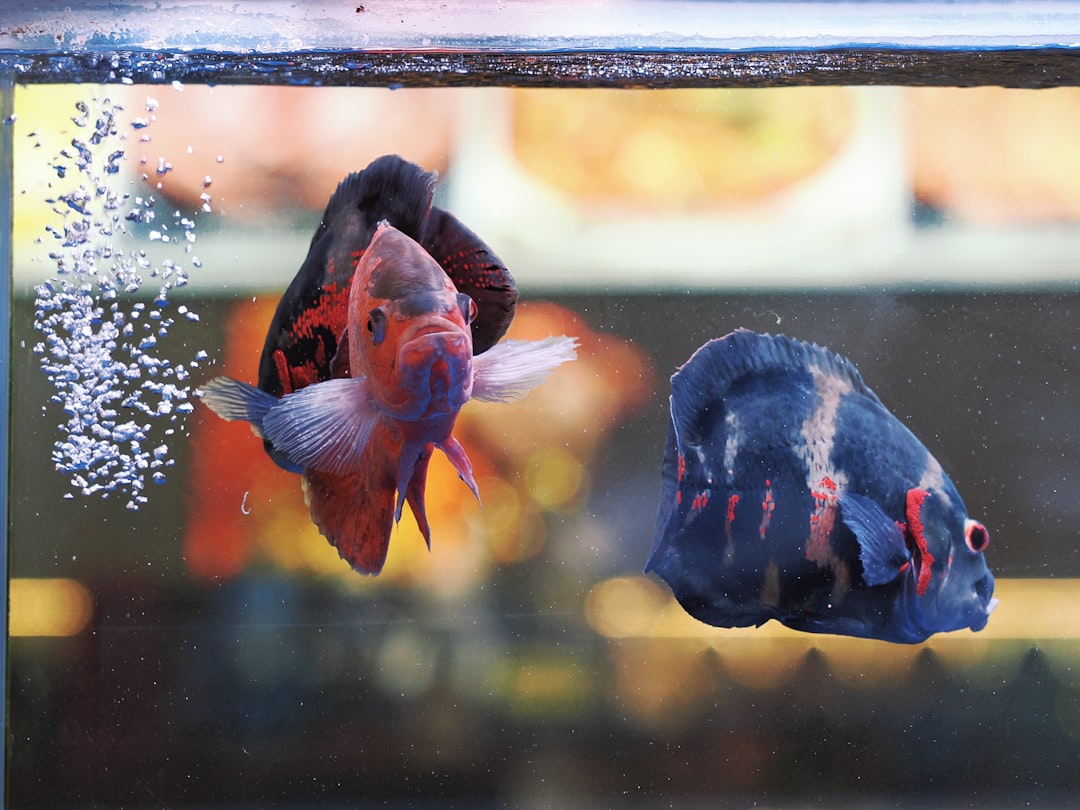
An Oscar (Astronotus ocellatus) is a large, intelligent South American cichlid that grows to around 25–35cm and lives for 10–15 years. One adult needs a minimum of 280 litres with a 120cm footprint, warm water at 24–27°C, a pH anywhere between 6.0 and 8.0, and heavy filtration to cope with how much waste it produces. They are not difficult fish to keep alive — they are difficult fish to house.
That is the honest headline, and it is the bit UK aquatic shops often skip when they sell you a 5cm juvenile for a few pounds. Oscars are among the most rewarding freshwater fish you can own: they beg at the glass, learn your routine and have genuine personality. But almost every Oscar rehomed on UK forums is there because it outgrew a 200-litre tank in eighteen months. Buy the tank first.
- An adult Oscar reaches 25–35cm, so a single fish needs at least 280 litres — 400 litres or more for a pair.
- They are messy, high-waste fish: over-filter heavily and change 30–50% of the water weekly.
- Feed a quality large-cichlid pellet with occasional prawn, mussel or earthworm. Never use feeder fish.
- Oscars live 10–15 years and recognise their keeper — treat one as a decade-long commitment, not an impulse buy.
Oscar quick facts
- Adult size: 25–35cm (rarely up to 40cm in very large tanks)
- Minimum tank size: 280 litres for one; 400–450 litres for a pair
- Temperature: 24–27°C
- pH: 6.0–8.0 (they adapt happily to typical hard UK tap water)
- Hardness: 5–20 dGH — unfussy
- Lifespan: 10–15 years, sometimes longer
- Temperament: Semi-aggressive, territorial, predatory towards anything it can swallow
- Diet: Omnivore leaning carnivore
- Difficulty: Intermediate — easy behaviour, demanding logistics
Tank setup: space, filtration and things that survive being redecorated
Footprint matters more than volume. A 120cm x 45cm x 45cm tank (about 240 litres) is the absolute floor for a single Oscar, and most experienced keepers in the UK settle on a 120cm x 50cm x 50cm or a 150cm tank at 300–450 litres. Depth of water is largely irrelevant to a fish that spends its day patrolling the bottom two-thirds.
Filtration is where budgets get eaten. Oscars are extraordinarily messy: they shred food, spit substrate and produce a huge ammonia load. Aim for turnover of at least 6–8 times the tank volume per hour, which in practice means two large external canisters or one oversized unit. Our guide to the best canister filters in the UK covers the sizing maths. A high-flow external filter rated well above your tank volume is money well spent here — undersizing it is the most common Oscar mistake after undersizing the tank.
Keep the layout simple and heavy. Oscars uproot plants, rearrange gravel and shove décor around for entertainment, so use large smooth river cobbles, bogwood too heavy to shift, and either bare glass or a fine sand substrate that is easy to siphon. If you want greenery, only tough epiphytes tied to wood stand a chance — Anubias is the usual survivor, and even that gets nibbled. A 200–300W heater with a guard is essential; see our UK heater guide for sizing. Fit a tight-fitting lid, because startled Oscars jump.
Never add an Oscar to an uncycled tank. Their waste output will spike ammonia fast in immature filtration, so read our guide to cycling an aquarium and confirm zero ammonia and nitrite before the fish goes in. Once running, a 30–50% weekly water change is not optional — it is the main thing keeping nitrate down and preventing hole-in-the-head.
Feeding an Oscar properly
A good quality sinking or floating cichlid pellet sized for large fish should form 70–80% of the diet. Supplement two or three times a week with defrosted prawn, mussel, cockle, earthworms or the occasional strip of white fish. A large cichlid pellet from a reputable brand gives you the vitamin and pigment content Oscars need to keep their colour and avoid deficiency-related head pitting.
Two firm rules. First, do not feed feeder goldfish or minnows: they are a genuine disease vector and contain thiaminase, which destroys vitamin B1 over time and is strongly associated with poor condition in predatory cichlids. Second, do not feed mammal meat such as beef heart as a staple — Oscars cannot process that fat load well. Feed adults once a day, five or six days a week, and skip a day entirely; juveniles can take two smaller meals daily while growing.
Overfeeding an Oscar is easy because they always act starving. Watch nitrate rather than the fish’s expression: if nitrate is creeping past 40 ppm between water changes, you are feeding too much, filtering too little, or both. Our article on lowering nitrate is worth a read for large-fish keepers.
Tank mates and temperament
Oscars are not indiscriminately aggressive — they are predatory and territorial. The working rule is that anything that fits in the mouth goes in the mouth, and an adult Oscar’s mouth is startlingly large. Neons, guppies, shrimp and small rasboras are food, full stop.
Workable companions in a 400-litre-plus tank include silver dollars, Severums, firemouths, larger Synodontis catfish, common or sailfin plecos and other robust mid-size cichlids. Avoid Central American heavyweights such as red devils or Jaguar cichlids unless you enjoy conflict, and avoid slow long-finned fish like angelfish, which get nipped to pieces. If you are new to cichlids generally, our roundup of the best cichlids for UK beginners lists gentler starting points.
Many UK keepers eventually go the other way and keep a single Oscar species-only. It is the lowest-stress option, the fish shows more personality, and it lets the filtration keep up. A lone Oscar in a big, clean tank is a genuinely excellent pet. If yours starts hanging listlessly at the surface or refusing food, check parameters first — see why fish sit at the top of the tank and how to reduce ammonia.
Frequently asked questions
How big a tank does one Oscar really need?
For a single adult Oscar, 280 litres (roughly a 120cm x 45cm x 45cm tank) is the realistic minimum, and 350–450 litres is far better. Oscars are bulky, heavy-bodied fish that grow to 25–35cm in a few years, and they need floor space to turn rather than height. A 120cm footprint is the single most important number when you are shopping.
Can Oscars live with other fish?
Yes, but only with robust tank mates of a similar size that cannot be swallowed. Silver dollars, common plecos, Severums, larger Synodontis catfish and firemouths all work in a big enough tank. Anything under about 8cm will eventually be eaten, and small barbs or tetras are simply live food to an Oscar.
Why has my Oscar got pits or holes on its head?
Those pits are hole-in-the-head (HLLE), usually caused by a combination of poor water quality, high nitrate and a nutritionally thin diet, sometimes with the Hexamita parasite involved. Increase water changes to reduce nitrate below 20 ppm, switch to a varied high-quality diet with vitamin-rich foods, and the lesions will often heal over several weeks.
— Jaqline Smalling, FishForever
Leave a Reply