
Honey gouramis (Trichogaster chuna) are one of the best small centrepiece fish for a UK community tank — peaceful, hardy, beautifully golden, and far less prone to disease than their dwarf gourami cousins. At just 5 cm, they suit smaller tanks and get along with almost everything.
Here is how to keep them.
- Honey gouramis are peaceful, hardy, 4–5 cm labyrinth fish ideal for small UK community tanks.
- They are a much lower-disease alternative to dwarf gouramis.
- Keep them in a densely planted 60-litre-plus tank at 24–28 °C with an air gap under the lid.
- They are shy feeders — pair only with gentle tank mates.
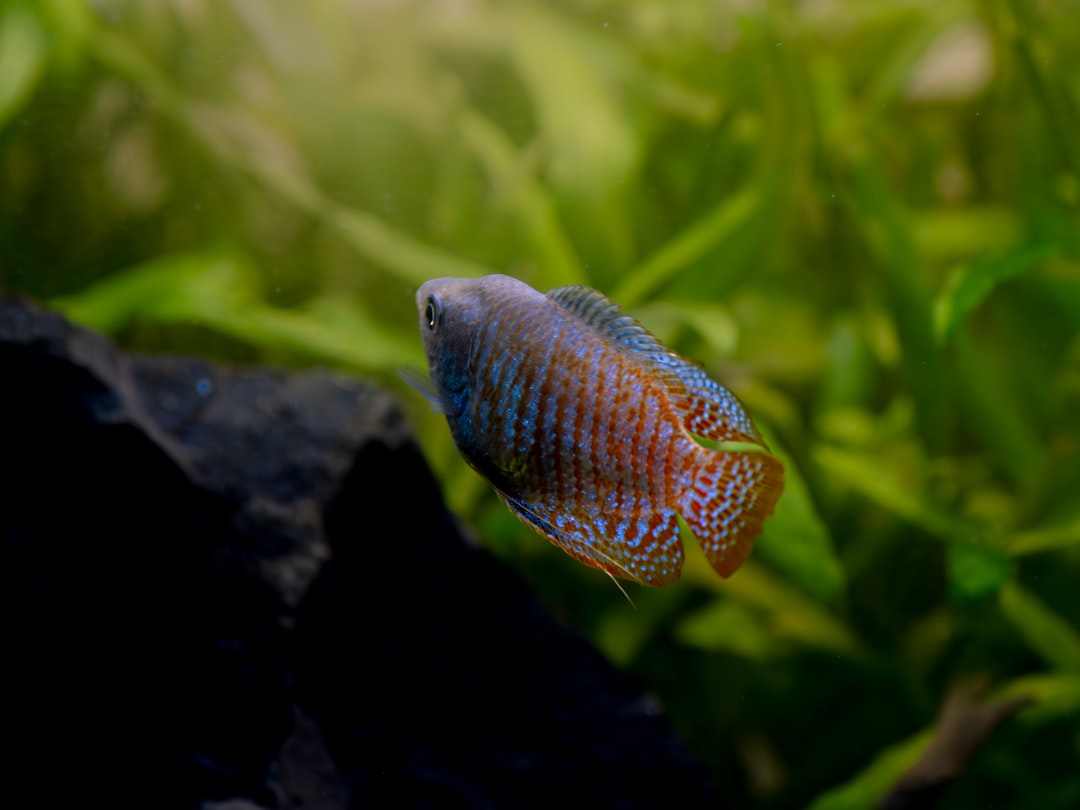
Quick facts
- Adult size: 4–5 cm
- Tank size: 60 litres minimum
- Water: pH 6.0–7.5, soft to medium, 24–28 °C
- Lifespan: 4–8 years
- Temperament: peaceful, shy
Why choose honey over dwarf gourami
Honey gouramis are the pragmatic alternative to dwarf gouramis, which suffer from a widespread incurable virus (DGIV). Honey gouramis have far lower disease rates, the same peaceful temperament, and a smaller adult size — making them the safer, easier choice for most beginners.
Tank setup and feeding
Honey gouramis are labyrinth fish that breathe air at the surface, so leave an air gap under the lid. They love densely planted tanks with floating plants for cover and gentle flow. Set a heater to 26 °C.
Feed small micro pellets and frozen foods. They are shy, so make sure they get their share at feeding time.
Tank mates
Good tank mates: small tetras, rasboras, corydoras, otocinclus, cherry shrimp. Avoid fin-nippers and boisterous fish that outcompete these gentle feeders.
Frequently asked questions
Are honey gouramis good for beginners?
Yes — they are hardy, peaceful and far less disease-prone than dwarf gouramis, making them one of the best small centrepiece fish for a beginner community tank.
What size tank do honey gouramis need?
At least 60 litres. They are small at 4–5 cm but appreciate a densely planted tank with floating cover and gentle flow.
Can honey gouramis live together?
A single specimen or a male-female pair works well. Multiple males can squabble in a small tank, so give them space and cover if keeping several.
— Jaqline Smalling, FishForever
Leave a Reply