
Neon tetras are the most popular aquarium fish in the world, and the second-most mis-sold (behind common plecos). They’re marketed as beginner-friendly community fish. In reality, modern commercially-farmed neons are prone to a specific incurable disease (Neon Tetra Disease), fragile in transport, and require mature tanks to thrive.
This guide covers proper neon care, the disease reality, and the safer alternative that most UK aquarists would be better off with: cardinal tetras.
This article contains affiliate links. If you buy through one of them, FishForever earns a small commission at no cost to you. We only recommend products we’d use ourselves. See our Affiliate Disclosure.
- Neon tetras (Paracheirodon innesi) are prone to incurable Neon Tetra Disease — cardinal tetras are the hardier, near-identical alternative.
- Keep a shoal of 8 or more in soft, slightly acidic water in a mature tank.
- Dark substrate and dense planting make their colours vivid.
- Adult angelfish and larger fish will eat them.
Quick facts
- Scientific name: Paracheirodon innesi
- Origin: Amazon Basin — soft, warm, tannin-stained water
- Adult size: 3–4 cm
- Lifespan: 3–5 years (many die within months due to disease)
- Water temperature: 22–26°C
- pH: 5.5–7.5 (prefer slightly acidic, ideally 6.0–6.8)
- Water hardness: soft (1–8 dGH)
- Minimum tank size: 40L for a shoal of 6+
- Shoal size: 8+ ideal, absolute minimum 6
The disease warning (this matters)
Neon Tetra Disease (NTD) — caused by the sporozoan Pleistophora hyphessobryconis — is an incurable, contagious disease specifically prevalent in captive neon tetras. Symptoms:
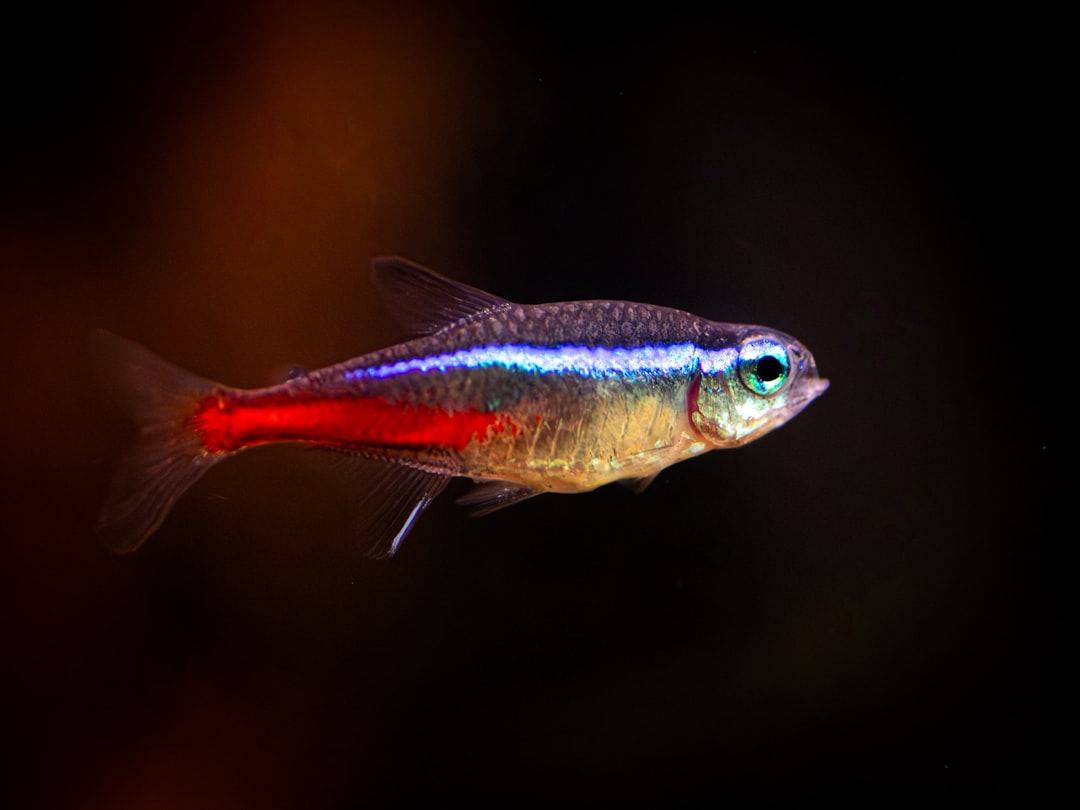
- Colour loss along the sides (the classic blue-red stripe fades)
- White patches under the skin
- Erratic swimming
- Weight loss despite eating
- Curved spine as it progresses
There is no cure. Affected fish die within weeks; the parasite spreads to other tetras (and some non-tetras) in the tank.
The disease is so prevalent in commercial neon tetras that some hobbyists refuse to keep them — losing 30-50% of any group to NTD within the first year is not unusual.
How to minimise risk:
- Quarantine new neons for 4–6 weeks in a separate tank
- Only add neons to a mature tank (6+ months cycled) — stress from new setups triggers NTD
- Buy from reputable independent aquatic shops with visible stock quality
- Consider cardinal tetras instead — see below
Cardinal tetras — the better alternative
Cardinal tetras (Paracheirodon axelrodi):
- Same size, shape, and school behaviour as neons
- Slightly more red (red belly extends full body length, whereas neons have shorter red)
- Not susceptible to NTD — different species, different immunity
- Hardier in transport
- Cost slightly more (£3–£5 vs £2–£3 for neons)
- Widely available in UK aquatic shops
For virtually every UK community tank use case, cardinal tetras are the smarter buy. The extra £5–£10 for a group of 8 saves the frustration and heartbreak of NTD.
The rest of this guide applies equally to both species.
Tank setup
Tank size
- Minimum: 40L for a shoal of 6
- Better: 60L for a shoal of 10–12
- Ideal: 90L for a proper display shoal of 20+
Neons look their best in large groups. A shoal of 20 in a planted 90L tank is one of the most beautiful sights in the freshwater hobby.
Filter and heater
- Gentle-moderate flow filter — Fluval U2 or Fluval 107 canister with spray bar diffusing flow
- 50–100W adjustable heater set to 24°C — see our best aquarium heater UK guide
Plants and substrate
Neons evolved in blackwater — dark, tannin-stained streams with heavy plant cover. To bring out their colour, mimic this:
- Dark substrate — black aquarium sand or dark gravel
- Dense planting — Amazon frogbit floating for shade, background plants (Vallisneria), mid-ground plants (Cryptocoryne)
- Indian almond leaves — release tannins that mildly lower pH and produce the amber-tinted “blackwater” look neons love
- Bogwood or driftwood — same tannin release, also hardscape
Under dark planted setups, neon colour becomes vibrant electric blue — spectacular.
Water chemistry
Cycle the tank properly first — see our UK cycling guide. Then:
- Ammonia / Nitrite: 0 (always)
- Nitrate: under 20 ppm
- pH: 6.0–7.0 ideal; tolerate up to 7.5 but colour suffers above 7.2
- Hardness: soft (2–8 dGH ideal)
- Temperature: 23–25°C
UK soft-water areas (Scotland, Wales, Southwest) are naturally perfect for neons. Hard-water areas (London, Home Counties, Yorkshire) need to soften — how to lower pH guide.
Feeding
Small omnivores. Small foods.
Daily:
- Small tropical flake — Tetra Prima Micro Sticks, Hikari Micro Wafers
- Small sinking pellets for variety
Treats 2–3× weekly:
- Frozen daphnia — neons love it
- Frozen brine shrimp (small size)
- Micro pellets designed for small fish
Feed twice daily, only what fish clear in 90 seconds. Overfeeding is stressful for the whole tank.
Tank mates
Neons are peaceful and safe with small community fish, but their small size makes them prey for larger species.
Excellent tank mates:
- Other small tetras — cardinals, embers, black neons, glowlights, rummy-nose
- Small rasboras — harlequins, chili rasboras
- Corydoras catfish — bottom-feeders
- Otocinclus catfish — peaceful algae eaters
- Cherry shrimp — safe together
- Kuhli loaches — nocturnal, no conflict
Avoid:
- Any fish larger than 10cm — angelfish, gouramis, larger tetras all eat neons as adults
- Bettas — some individuals hunt small tetras
- Barbs — nippy with slower small fish
- Cichlids — all eat neons
Buying strategy
Because of NTD prevalence:
- Buy from healthy stock only — no dead or dying tetras visible in shop tank
- Ask when the shop got them — 2+ weeks old stock is better (weak fish died already, survivors are stable)
- Buy in groups — 8+ per purchase. Better to buy fewer, healthier fish than more sickly ones.
- Quarantine 4+ weeks in a spare tank before adding to main community
- Consider cardinals over neons if you don’t need the exact neon look
Expect to pay £2–£3 per neon in UK aquatic shops.
Common problems
Colour fade + weight loss + white patches — likely NTD. Isolate immediately. Prognosis poor. Consider humane euthanasia to prevent spread.
Rapid gill movement, hanging at surface — poor water quality or temperature stress. Test water, verify heater.
Fish disappearing overnight — either jumped out (need lid), eaten by tank mate, or died and decomposed unseen.
Ich — see our ich treatment guide. Neons handle it OK at standard doses.
Not shoaling / hanging alone — group too small. Add more neons; minimum group is 8.
Bottom line
Neon tetras deserve every bit of their popularity: colourful, peaceful, active, ideal community fish. But NTD makes them a lottery — some batches thrive, others crash.
For most UK aquarists, cardinal tetras are the better choice. Same look, better health, similar price. If you specifically want neons, quarantine religiously and expect some losses.
Kept in a large mature planted tank with dark substrate, a shoal of 20 neons or cardinals is one of the most spectacular sights in freshwater aquascape.
Frequently asked questions
Are neon tetras good for beginners?
They are popular but prone to incurable Neon Tetra Disease and fragile in transport. Cardinal tetras look almost identical, are hardier, and are the better choice for most UK aquarists.
How many neon tetras should be kept together?
At least eight, ideally more. They are shoaling fish that show natural behaviour and colour only in larger groups.
What water conditions do neon tetras need?
Soft, slightly acidic water (pH 6.0–7.0) at 23–25 °C in a mature, well-planted tank. They come from blackwater streams and colour up best over dark substrate.
Related: best aquarium fish for UK beginners, how to lower pH in an aquarium, best aquarium plants UK, how to cycle a fish tank.
— Jaqline Smalling, FishForever
Leave a Reply