
Kuhli loaches are the aquarium equivalent of small friendly snakes. Long, slender, striped like miniature humbugs, they slither along substrate and wedge themselves into every gap in the tank. Watching them is one of the small pleasures of a well-planted community aquarium — but only if you keep enough of them, because a single kuhli loach spends its life hiding out of sight and never comes out.
This guide covers what UK aquatic shops often don’t tell buyers: kuhli loaches are shoaling fish, they need soft substrate, they don’t tolerate copper-based medications, and their identification is genuinely confusing because three or four separate species are all sold under the same name.
This article contains affiliate links. If you buy through one of them, FishForever earns a small commission at no cost to you. We only recommend products we’d use ourselves. See our Affiliate Disclosure.
Species — what “kuhli” actually means
“Kuhli” as sold in UK shops usually means one of several closely-related Pangio species:
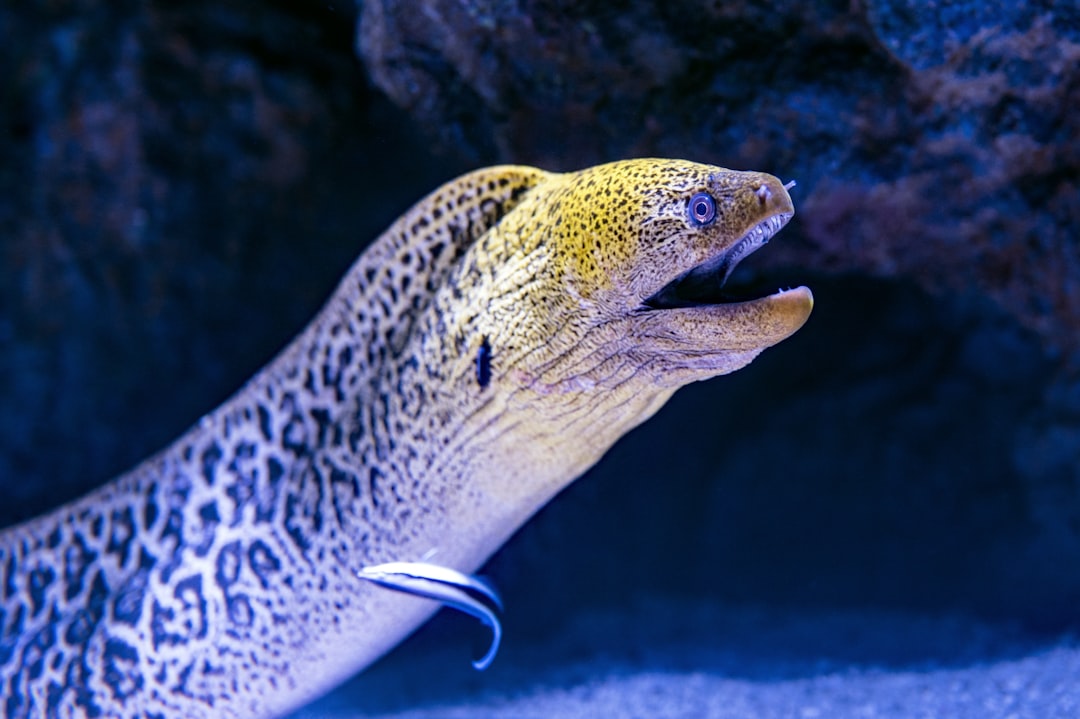
- Pangio kuhlii — the true kuhli loach. Wide brown/black bands separated by yellow-orange. Adult 8–10 cm.
- Pangio semicincta — the “half-striped” kuhli. Similar bands but they don’t wrap fully around the belly.
- Pangio myersi — the “giant kuhli” or Myer’s kuhli. Larger (up to 12 cm), broader bands.
- Pangio filinaris — thinner, less strongly patterned.
For a home aquarium the care is essentially identical for all of them, but they will not typically interbreed and they do shoal preferentially with their own species. Buy the same “type” from the same tank at the same time and you’ll do fine.
Quick facts
- Scientific name: Pangio kuhlii (or one of its close relatives)
- Origin: Sumatra, Borneo, Java, Malaysia — slow-moving forest streams
- Adult size: 8–12 cm
- Lifespan: 8–10 years typical, up to 14 in exceptional conditions
- Water temperature: 24–28 °C
- pH: 5.5–7.5 (prefer slightly acidic)
- Water hardness: soft to medium (2–10 dGH ideal, tolerates higher)
- Minimum tank size: 90 litres for a group of six
- Ideal shoal size: 6+ (they need company)
Tank setup — soft substrate is non-negotiable
Kuhli loaches are underground fish in the wild. They forage by pushing their snouts through leaf litter and soft mud. In captivity, sharp gravel damages their sensitive skin (they’re effectively scaleless), and they cannot bury or burrow properly in it. Coarse gravel is the single biggest cause of infected sores on kuhlis kept in UK community tanks.
Requirements:
- Soft, fine substrate. Sand is ideal — silver sand from a UK builders’ merchant, aquarium-grade sand, or fine pool-filter sand. If you must use gravel, keep it very fine and smooth-edged (no crushed coral, no sharp aquarium quartz). Depth of at least 3 cm so they can bury.
- Hiding places. Kuhli loaches want darkness during the day. Bogwood with crevices, ceramic caves, coconut shell halves, dense clumps of plants at the bottom (Java moss, Vallisneria). The more hiding spots, the more time you’ll see them out during daylight — because they only come out when they feel safe.
- Cover for filter intake. Kuhlis are notorious for finding their way into filter intake tubes and canister-filter impellers. Sponge over the intake, always.
- Tight lid. They can and do escape through tiny gaps. A gap around a heater cable is enough.
Water: slightly acidic, soft, warm. Add Indian almond leaves (catappa leaves) to the tank — they release tannins that lower pH gently, tint the water golden-brown, and produce the biofilm kuhli loaches graze on. Aquarium shops sell these for about £5 for a large pack. One or two leaves per 30 litres, replaced monthly.
Shoaling
A single kuhli loach is a stressed kuhli loach. In a group of 2–3 they hide constantly. In a group of 6 or more they behave normally — swimming in loose shoals, coming out during daylight, foraging visibly on the substrate.
Buying a single kuhli “to add interest” and expecting to see it is the most common mistake. If the tank is stocked and you can only fit one more group, kuhli loaches are the wrong species. Choose corydoras (which shoal in 4–5) instead.
Feeding
Omnivorous scavengers. In a community tank they eat what falls to the bottom, but that’s not usually enough — they’ll be undernourished if you rely on fish-food fallout.
Target feed at lights-out:
- Sinking pellets — Hikari Sinking Wafers, Tetra Prima Micro Sticks
- Frozen bloodworm — kuhli loaches love this, react to it fast
- Frozen brine shrimp, daphnia — for variety
- Blanched vegetables — courgette or spinach, dropped in overnight; they’ll graze the surface
Drop food after lights out. Kuhli loaches are nocturnal by nature and much more willing to feed openly in dim light. Feeding during daytime means the middle-water fish eat all the food first.
Tank mates
Peaceful with everyone. Kuhli loaches are prey animals; other fish are only a problem if they hunt kuhlis, not the reverse.
Good tank mates:
- Tetras (soft-water species: neons, cardinals, rummy-nose, ember, glowlight)
- Rasboras (harlequin, chilli)
- Corydoras — happy on the same substrate, similar temperament
- Dwarf gouramis, honey gouramis
- Ram cichlids, apistogramma
- Otocinclus
- Bristlenose plecos, as covered in our ancistrus guide
- Cherry shrimp (kuhlis don’t hunt them, though babies may be eaten opportunistically)
Bad tank mates:
- Cichlids larger than ram/apisto (they’ll hunt kuhlis at night)
- Loaches of aggressive species (yoyo, clown — larger and territorial)
- Angelfish (they’ll strike at kuhli movement)
- Bettas — kuhli movement can trigger constant flaring, exhausting for the betta
- Anything with a mouth wider than a kuhli’s body
Kuhlis are safe with mollies chemistry-wise only if you don’t push the hardness too high. Mollies prefer alkaline hard water; kuhlis prefer soft slightly acidic water. Overlap exists at neutral moderately-hard water but neither species is at its best there.
Health notes
Scaleless. Kuhli loaches have reduced scales along their body. This makes them more sensitive to medications than most tropicals. Specifically:
- Copper-based medications kill them rapidly. Read every treatment label.
- Malachite green at full dose can kill them. Use half-dose for kuhli-inhabited tanks.
- Salt baths are stressful even at low doses. Avoid unless absolutely necessary.
- For ich treatment, use eSHa EXIT or Waterlife Protozin at the “sensitive species” (half) dose. See our ich treatment guide for the full protocol.
They tolerate a properly cycled tank exceptionally well, but any sudden ammonia or nitrite spike hits them harder than scaled fish.
Common health issues:
- Infected sores on the body — from sharp substrate. Fix by changing to sand and using a light antibacterial (Waterlife Myxazin at half dose).
- Whitish fluffy patches — usually fungus from substrate injuries. Same fix.
- Sudden disappearance for days — usually just hiding. Check they’re not in a filter or behind decor. If missing for over a week, they’re likely dead behind something.
Breeding
Very difficult in home aquaria and rarely achieved without hormonal induction. In commercial breeding operations, kuhlis are treated with hormones to induce spawning. Almost all kuhli loaches in UK trade are wild-caught, mostly from Indonesian and Malaysian streams.
That means: two things follow. First, expect your kuhlis to arrive fragile (wild-caught, long shipping). Quarantine them and feed heavily for the first 6 weeks before adding to the main tank. Second, if you’re interested in the sustainability of the hobby, prefer species that are captive-bred — bristlenose plecos, livebearers, most tetras — over wild-caught kuhli loaches. Ecological consequences on the source streams are increasingly documented.
Life expectancy — the surprising bit
Kuhli loaches live a lot longer than most people expect. Well-kept kuhlis in a stable planted tank routinely live 8–10 years. There are documented cases of 14 years. Almost none reach that in UK homes because:
- Wild-caught stock arrives already stressed
- Sharp substrate causes chronic injuries
- Copper medications kill them silently
- Solo/pair keeping produces slow decline from stress
Fix those and a kuhli loach genuinely lasts a decade. That’s longer than most cats.
Bottom line
Buy at least 6, put them in a well-cycled soft-water planted tank with fine sand substrate, and leave them alone. In three months they’ll come out during the day and become the entertaining, worm-like personalities the hobby loves. Buy 2 in gravel with cichlids and you’ll have dead loaches by summer.
Products mentioned in this article
Amazon UK links. Prices and stock change; we recommend checking a couple of independent UK aquatic shops for comparison before buying.
Setting up a kuhli tank from scratch? Cycle it properly first. Other good UK community-tank residents: ghost shrimp, zebra danios, bristlenose plecos. Working out stocking? Volume calculator here.
— Jaqline Smalling, FishForever
Leave a Reply