
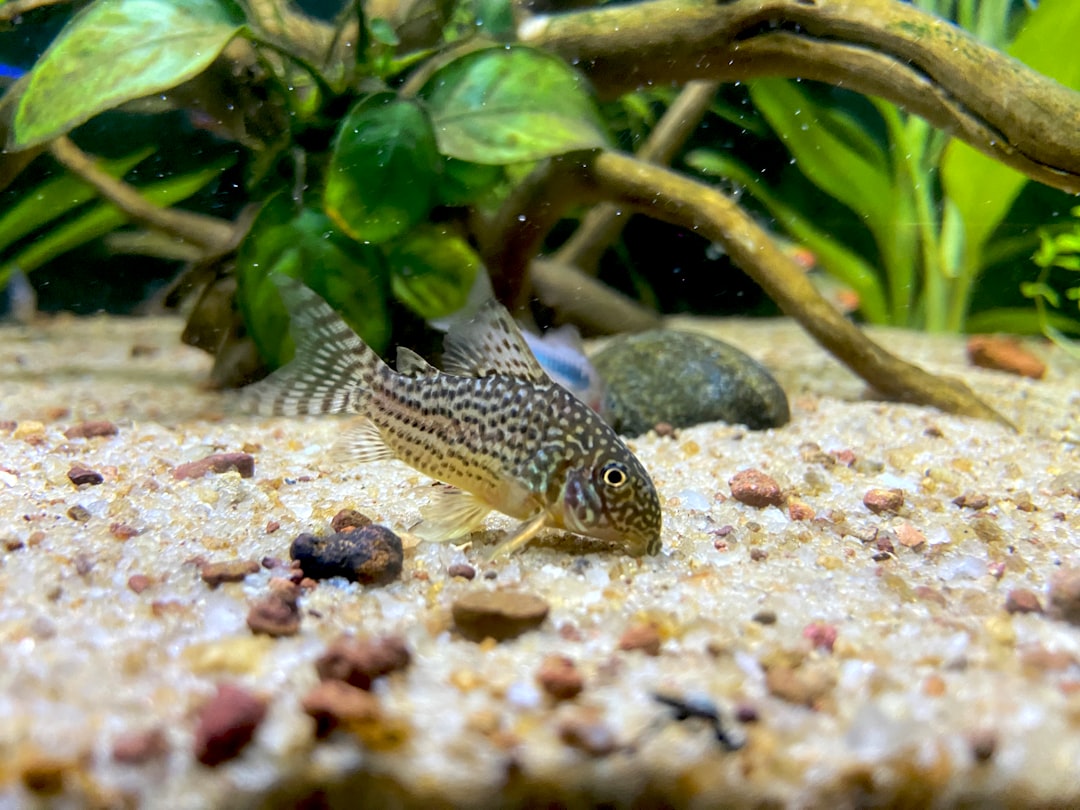
Pictus catfish are the sports cars of the catfish world — sleek, silver, spotted, and constantly on the move, unlike the slow bottom-sitters people expect. They’re a rewarding, active fish for a larger community tank, but they come with specific needs: space to swim, a group of their own kind, and careful handling because of their sharp spines. This UK guide covers pictus catfish care.
Here’s how to keep them.
- Pictus catfish are fast, active, sociable catfish — not slow bottom-sitters.
- They need a long 200-litre-plus tank and a group of three or more.
- Their sharp fin spines catch in nets — move them in a container instead.
- They eat fish small enough to swallow, so avoid tiny tetras and shrimp.
Quick facts
- Adult size: 10–13 cm
- Tank size: 200 litres minimum
- Water: pH 6.5–7.5, 24–28 °C
- Lifespan: 8–10 years
- Temperament: peaceful but active; eats small fish
Space, groups and sharp spines
Pictus are active swimmers that need a long tank of at least 200 litres and prefer a group of three or more. Their fin spines are sharp and can catch in nets — use a container rather than a net to move them, and take care when maintaining the tank. Give them smooth substrate to protect their barbels.
Feeding and tank mates
Omnivores with a big appetite, pictus take sinking pellets, frozen foods and most things offered. They will eat fish small enough to fit in their mouths, so avoid tiny tetras and shrimp. Good tank mates are medium, robust community fish and larger tetras.
Frequently asked questions
What size tank do pictus catfish need?
At least 200 litres. They are fast, active swimmers that need length to swim and do best in a group of three or more.
Are pictus catfish aggressive?
Not towards similar-sized fish — they're peaceful but very active. However, they will eat any fish small enough to fit in their mouths, so avoid keeping them with tiny tetras or shrimp.
Why shouldn't I use a net with pictus catfish?
Their sharp fin spines easily catch and tangle in net mesh, which can injure the fish and damage the net. Move them in a rigid container of water instead.
— Jaqline Smalling, FishForever
Leave a Reply