
You added one plant to the tank three months ago, and now there are 200 tiny snails on the glass. Every water change removes some; a week later they’re back. Fish are healthy, water is fine, but the snail population is out of control.
Welcome to the most common infestation in freshwater aquariums. This guide walks through the six methods for controlling pest snails — from gentle to nuclear — plus, critically, whether you actually need to.
This article contains affiliate links. If you buy through one of them, FishForever earns a small commission at no cost to you. We only recommend products we’d use ourselves. See our Affiliate Disclosure.
- Pest snail populations are food-limited — cutting feeding by 30–50% crashes their numbers within weeks.
- Assassin snails are the pragmatic UK control: 5–8 in a 60-litre tank clear an infestation without harming other life.
- Malaysian trumpet snails are actually beneficial and worth keeping.
- Avoid chemical snail killers — they kill beneficial snails and shrimp and leave rotting carcasses that spike ammonia.
First: what kind of snail are you looking at?
Different snails behave differently. The three “pest” snails common in UK community tanks:
Bladder snails (Physa / Physella)
- Look: small (up to 10mm), pointed cone-shaped shell, right-handed spiral, translucent brown-grey
- Speed: fast for a snail
- Diet: biofilm, algae, decaying plant matter, uneaten fish food
- Breeding: VERY prolific — 20+ eggs per clutch, clutches every 10 days
- Verdict: the classic aquarium pest
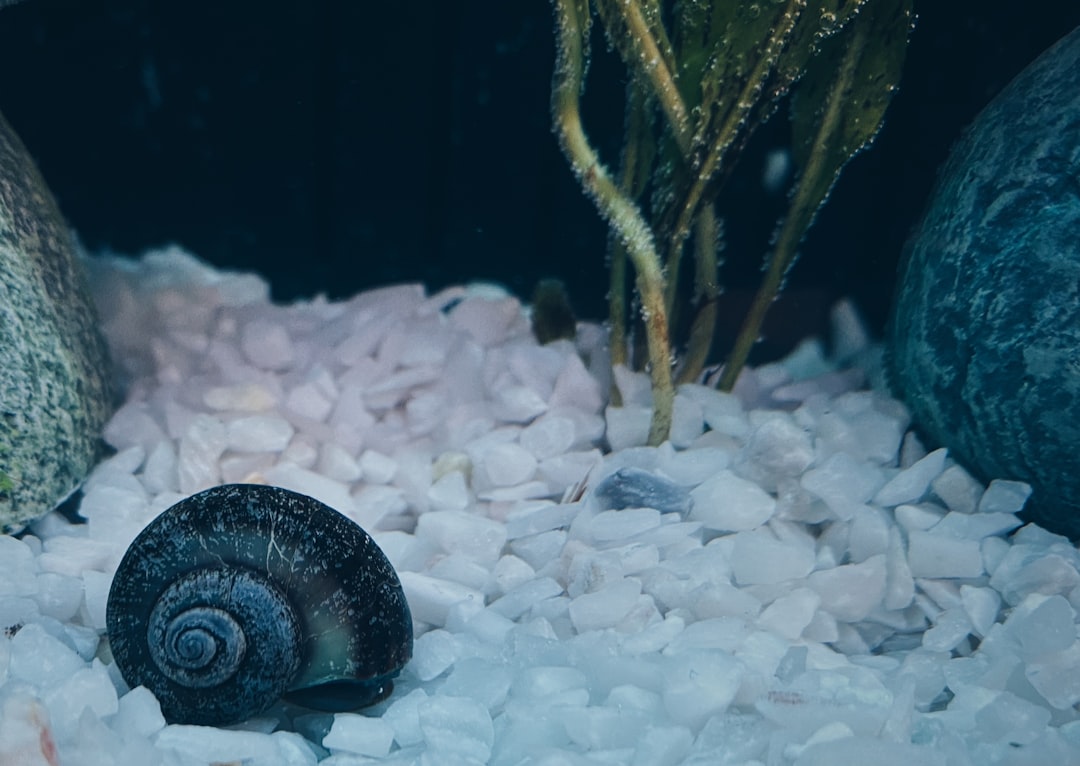
Ramshorn snails (Planorbella)
- Look: flat coiled shell like a tiny cinnamon bun, 5–25mm, various colours (red, brown, blue)
- Speed: slow
- Diet: biofilm, algae, plant matter (may eat softer plants like elodea)
- Breeding: prolific but slower than bladder snails
- Verdict: attractive; some hobbyists keep intentionally
Malaysian trumpet snails (Melanoides tuberculata)
- Look: elongated cone shell, 15–30mm, brown/grey
- Speed: slow
- Diet: substrate detritus, biofilm — burrow through substrate
- Breeding: live-bearers (no eggs); prolific
- Verdict: actually beneficial in most tanks
Do you actually need to get rid of them?
Before treating, consider: are the snails causing an actual problem, or just looking unsightly?
Snails are almost always a symptom, not a disease. They breed to match available food. If your tank is producing enough waste to sustain hundreds of snails, that’s the underlying issue — you’re overfeeding, understocking plants, or underchanging water.
When to leave them alone:
- Malaysian trumpet snails specifically — they aerate the substrate and eat waste. Beneficial.
- If the population is small (a few dozen) and not growing.
- If you have snail-eating fish (loaches, some gouramis) that keep numbers in check.
When to reduce them:
- Population is genuinely huge (hundreds visible) and unsightly.
- Snails are climbing above the waterline (indicates water quality issues).
- They’re eating your live plants (usually ramshorn on soft plants).
Even in “get rid” mode, the goal is usually reducing numbers, not achieving zero. Complete elimination is nearly impossible without a total tank reset.
The 6 methods, from gentle to nuclear
Method 1 — Reduce feeding (root cause fix)
The single most effective long-term solution. Snail populations are food-limited. Cut fish feeding by 30–50% and the snail population crashes within 4–6 weeks.
- Feed once per day instead of twice
- Only what fish clear in 90 seconds (not 2 minutes)
- One or two fasting days per week
- Never leave uneaten food
Combined with weekly water changes to remove existing waste, this alone often fixes the problem.
Method 2 — Manual removal + traps
Simple daily approach: After lights-out, snails move onto the glass to feed. Wipe them off with a net or fingers, remove.
Snail traps: aquarium snail traps are plastic containers with entry slots snails can enter but struggle to exit. Bait with algae wafer or blanched vegetable overnight, remove and empty in the morning. £6–£10.
DIY trap: a lettuce leaf blanched briefly, weighted down with a rock, left overnight. Removed in the morning covered in snails.
Both methods reduce population but don’t fully clear an infestation on their own — supplement with method 1 or 4.
Method 3 — Snail-eating fish
Introduce a natural predator. Options that work in UK community tanks:
- Assassin snails (Anentome helena) — carnivorous snails that eat pest snails. 5–8 in a 60L tank clears a snail infestation within weeks. Won’t reproduce fast (need brackish for larvae), so numbers stay stable. About £3 each in UK aquatic shops.
- Yoyo loaches (Botia almorhae) — aggressive snail-eaters. Only for tanks 150L+ and with hardy tank mates (they can be nippy).
- Clown loaches — eat snails but grow huge (30cm) and need shoals of 5+ in massive tanks. Not for typical UK community setups.
- Dwarf puffer (Carinotetraodon travancoricus) — species-only tank required (aggressive toward other fish) but eats snails all day long.
Assassin snails are the pragmatic UK answer. Peaceful, small, no shoal requirement, don’t destroy the tank ecosystem.
Method 4 — Deprive of food + plants
Kill the underlying food supply:
- Big water change (50%)
- Deep gravel vacuum — remove every bit of detritus you can
- Skip feeding for 3–5 days
- Reduce plant matter to essential only during the reset
Snail population drops dramatically in 2–3 weeks. This is more disruptive to the tank than method 1 but faster.
Method 5 — Chemical treatment
Only use as absolute last resort. Snail-killer products contain copper or molluscicides that:
- Kill ALL snails including beneficial ones (Malaysian trumpets, nerite, mystery)
- Kill shrimp, if present
- May stress fish
- Leave rotting snail carcasses that spike ammonia
If you must:
- Waterlife Sterazin targets snails specifically
- NT Labs Anti-Snail is similar
- Always remove shrimp to a temporary bucket-tank first
- Follow with a big water change and dead-snail cleanup
- Expect ammonia spike from decomposing bodies — test daily
We wouldn’t recommend this in most cases. Assassin snails do the same job without the collateral damage.
Method 6 — Nuclear: full tank reset
Absolute last resort:
- Remove fish to temporary tank
- Drain tank completely
- Discard substrate
- Scrub tank interior with vinegar solution + rinse thoroughly
- New substrate
- Re-cycle with new bacteria (fishless cycle — see our cycling guide)
- Reintroduce fish
This kills every trace of snail eggs. Also destroys your beneficial bacteria colony, plants, and 6 weeks of your time. Reserved for tanks that are being reset anyway.
Prevention (do this next time)
Every future plant, decor, or piece of driftwood you add is a potential snail vector. Snail eggs are microscopic and cling to leaves, roots, gravel from other tanks.
Prevention protocols:
- Bleach dip for new plants: 1 part bleach to 19 parts water, dip plants for 1–2 minutes (roots higher for delicate species), rinse thoroughly in dechlorinated water, then rinse in dechlorinator overnight before adding to the tank. Kills snail eggs and algae spores. Not for sensitive plants (mosses, delicate stems).
- Potassium permanganate dip: 10 mg/L for 15 minutes, gentler than bleach, kills snails and eggs.
- Buy plants from reputable sources — Tropica in-vitro tissue-culture plants are guaranteed snail-free.
- Quarantine driftwood/decor in a bucket of dechlorinated water for a week before adding.
Bottom line
Malaysian trumpet snails: leave alone, they help.
Bladder or ramshorn snails in small numbers: leave alone unless population is exploding.
Snail infestation you want to control:
- Cut feeding by 30–50%. Underlying fix. Do this always.
- Add assassin snails. 5–8 per 60L. They handle the population within weeks.
- Manual removal + snail traps as supplementary approach.
- Chemical / nuclear methods only if the above fails.
Skip the £8 “snail killer” bottles. They cause more problems than they solve.
Frequently asked questions
How do I get rid of snails in my fish tank?
Cut feeding by 30–50% to starve the population, add assassin snails as a natural predator, and remove snails manually or with a trap. Avoid chemical snail killers.
Are aquarium snails bad?
Not always. Malaysian trumpet snails aerate the substrate and eat waste. Bladder and ramshorn snails only become a problem when overfeeding lets them explode in number.
Where do aquarium snails come from?
Snails and their eggs hitchhike into tanks on new plants, decor and substrate from other tanks. Dipping new plants in a bleach or potassium permanganate solution prevents this.
Related: how to clean a fish tank, why is my fish tank cloudy (both often share underlying causes), how to lower nitrate in a fish tank.
— Jaqline Smalling, FishForever
Leave a Reply