
The difference between “fish in a glass box” and a real aquarium is decoration. Not just aesthetically — properly-decorated tanks have measurably lower fish stress, better water quality, and healthier ecosystems. Fish need hiding places, territories, plants for shade, and surfaces for biofilm.
This guide is the honest UK-focused version: what to buy, what to avoid, and how to put it together without wasting £200 on plastic decor your fish will ignore.
This article contains affiliate links. If you buy through one of them, FishForever earns a small commission at no cost to you. We only recommend products we’d use ourselves. See our Affiliate Disclosure.
- Natural aquascaping — real driftwood, aquarium-safe rock and live plants — beats plastic ornaments for both fish welfare and looks.
- Choose substrate for your fish: sand for catfish and loaches, fine gravel for general communities.
- Pre-soak new wood for a week to release tannins and help it sink.
- Avoid dyed gravel, beach shells, and unmarked ornaments, which leach into the water.
The two big schools of aquarium decoration
Natural aquascape — the modern default. Real driftwood, natural stone, live plants, sand or fine gravel substrate. Aesthetic goal: looks like a slice of a real waterway.
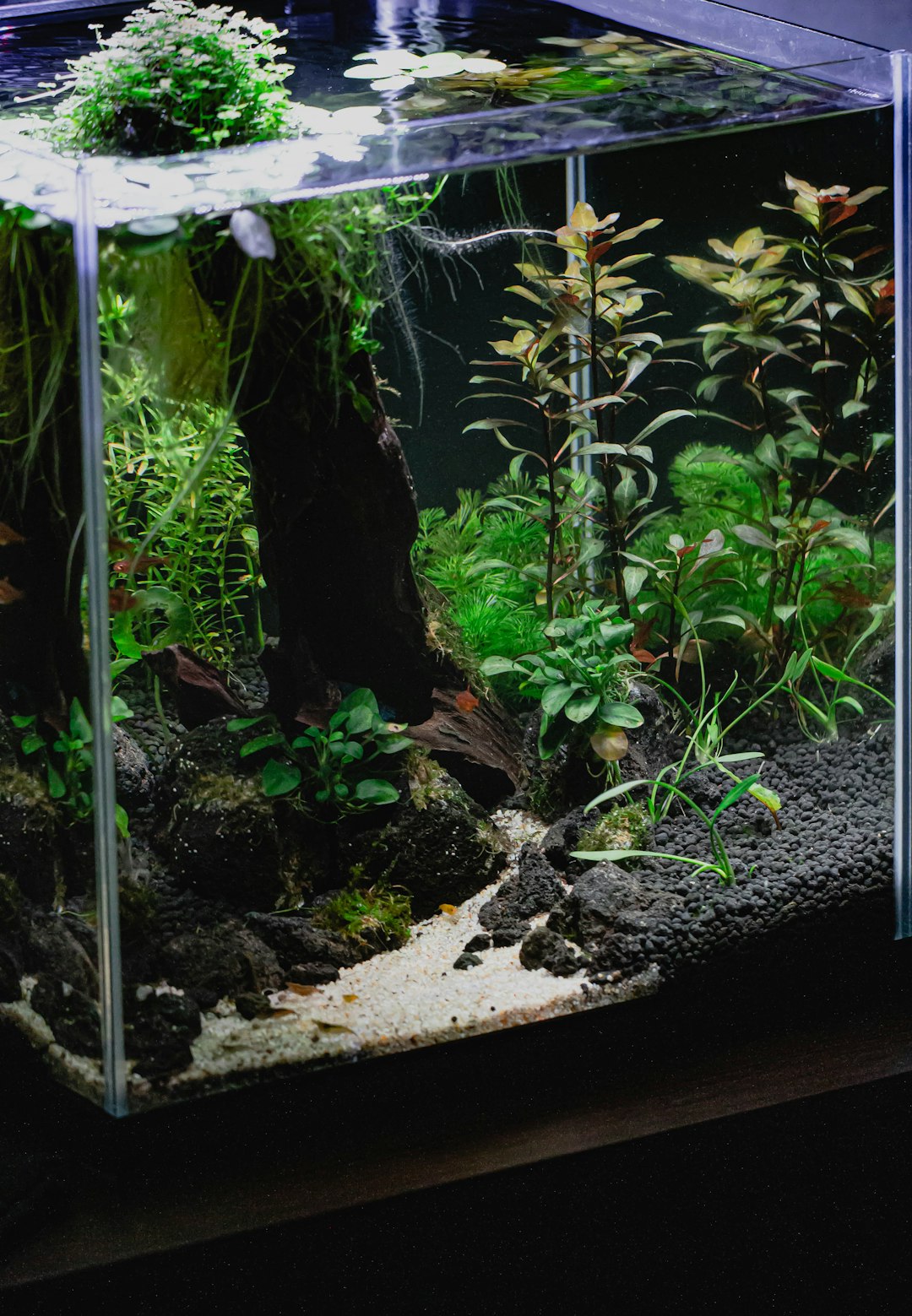
Themed / ornament aquarium — resin castle, plastic plants, brightly coloured gravel, novelty ornaments. The classic 1990s home aquarium.
Fish don’t care which look you go for as long as they have hiding places and stable water. But the natural aquascape:
- Ages beautifully (biofilm develops on wood, plants grow in)
- Supports biological filtration (live plants absorb nitrate)
- Actually looks better long-term
- Is what modern UK aquascape shops stock and support
We’d recommend natural for anyone starting fresh. Ornament tanks are fine if you have kids helping design the tank or if that’s your genuine preference. Just avoid the very worst offenders (see “what to avoid” below).
Layer 1 — Substrate (the foundation)
Everything else sits on the substrate. Choose based on the fish and plants you’ll keep.
Sand
- Best for: kuhli loaches, corydoras, most catfish, sand-sifting cichlids, and generally any tank with bottom-feeding fish
- Options: aquarium silver sand, black aquarium sand, pool filter sand
- Depth: 3–5 cm
- Rinse: 10+ times before installing — sand is dusty
Fine gravel
- Best for: general community tanks, mid-water and top-dwellers
- Options: natural aquarium gravel, black aquarium gravel
- Depth: 3–6 cm
- Rinse: 5+ times before installing
Aquasoil (planted-tank specialist)
- Best for: demanding planted tanks with root-feeding plants
- Options: ADA Amazonia, Fluval Stratum, Tropica Aquarium Soil
- Depth: 5–8 cm
- Costs more, releases ammonia during first 2–3 weeks (bad for existing tanks, fine for fresh setups)
What to avoid
- Coloured gravel (bright pink, purple, neon blue) — usually dyed with unstable coatings that flake. Never truly safe. Skip.
- Aquarium gravel with sharp edges — cuts corydoras and kuhli loach bellies. Feel a handful; if it feels prickly, don’t buy.
- Coral sand in freshwater (unless deliberately for hard-water fish like mollies) — raises pH significantly.
Layer 2 — Hardscape (wood and rock)
Hardscape gives a tank structure. Adult fish claim territories around it; shy fish hide behind it. Skip hardscape and you have a bare box.
Aquarium-safe wood
- Bogwood — the classic, dark chunks with texture
- Mopani wood — denser, sinks faster
- Spider wood / Redmoor — twisty, aesthetic branches
- Cholla wood — hollow, porous, brilliant for shrimp tanks
- Manzanita branches — thin ornamental branches, aquascape favourite
Pre-soak new wood for a week in a bucket, changing water daily. This releases initial tannins (which stain water yellow/brown) and helps the wood sink.
Some woods don’t sink for weeks — weight them down with rocks or aquascape stainless-steel weights until waterlogged.
Aquarium-safe rock
- Dragon stone — textured brown-red, aquascape favourite
- Seiryu stone — grey with white veining, iconic aquascape rock
- Lava rock — porous, lightweight, good for biological filtration
- Slate — flat pieces, ideal for cave-building
Don’t use rocks from your garden or a beach. They may leach minerals, contain shells (raising hardness), or harbour parasites. Aquarium-labelled rock only.
What to avoid
- Bare bogwood without pre-soaking — massive tannin release turns water tea-brown for weeks
- Rocks that fizz with vinegar — contain calcium carbonate, raise hardness
- Painted, glazed, or lacquered decorative rocks — coating leaches over time
Layer 3 — Live plants (see our full guide)
Live plants are essential for:
- Nitrate absorption
- Shade / hiding places
- Oxygenation
- Biofilm surfaces
- Aesthetic depth
Full detail in our best aquarium plants for UK beginners guide. For decoration purposes, aim for:
- Something tall in the back (Vallisneria, hornwort)
- Something midground (Cryptocoryne, Anubias)
- Something foreground or attached (Java fern, mosses)
- Something floating (Amazon frogbit) — shade + surface interest
Even three or four plants transform a tank aesthetically.
Layer 4 — Ornaments (optional, use sparingly)
Novelty ornaments — resin castles, sunken ships, treasure chests — are OK if:
- They’re aquarium-safe resin (labelled as such — check “aquarium safe” on packaging)
- They don’t have paint that flakes
- They fit the scale of the tank
- They don’t block fish hiding places
Aquarium-safe resin ornaments exist from reputable brands. Cheap unmarked ornaments from generic sellers should be avoided — the plastic or paint often leaches over months.
Fine to use in moderation:
- Resin caves for cichlids
- Themed ornaments if you like them
- Small “houses” or ornamental features
Don’t do:
- Fill the tank with ornaments — no swimming space left
- Mix multiple themes (Roman ruins + Star Wars + tropical fish house) — chaotic
- Add anything painted with non-aquarium paint (potentially toxic)
Layer 5 — Background
The back wall of the tank affects the whole visual. Options:
- Aquarium background poster — plain black or blue is our preference. Matte-finish stick-on paper adhered to the back exterior. Cheap (£5–£10), dramatic effect. Makes fish colours pop.
- Painted back — paint the exterior of the back glass matte black. Non-removable but very clean look.
- 3D background — foam or resin structures that fit inside the tank against the back wall. Impressive but reduces usable tank volume by 5–15%.
- Nothing / plain wall — fine but often shows cables and equipment. Usually worse than a background.
Plain black background is our default recommendation. Cheap, easy, always looks good.
Putting it all together — sample layouts
Basic 60L community
- 3–4 cm depth natural fine gravel
- One large piece of bogwood placed off-centre
- 2 medium dragon stones grouped near the wood
- Java fern attached to the wood
- Anubias attached to a stone
- Bunch of hornwort as background stems
- Amazon frogbit floating on top
- Plain black background
Cost: about £60–£80. Result: a properly-scaped tank.
Nano 30L shrimp tank
- 3 cm aquasoil OR fine gravel
- 2–3 pieces of cholla wood
- Handful of Java moss
- Small Anubias nana
- Indian almond leaves scattered
- Plain black background
Cost: about £40. Result: a shrimp-safe aquascape.
Themed 100L (cichlid)
- 3–4 cm aragonite substrate (raises hardness for African cichlids) OR fine gravel
- 3–4 large slate rocks stacked as a rockery
- 2 ceramic caves for territory
- Tough plants only (Java fern, Anubias) attached to rock/wood — cichlids dig up rooted plants
- Plain black background
Cost: about £100.
The 5-minute planning rule
Before you start buying, do this:
- Draw a rough sketch of the tank from the front (rectangle showing width and height).
- Sketch where you want the “focal point” — 60% of the way across from left, 60% up from bottom (the visual golden ratio) is a good default.
- Place hardscape on the sketch — wood usually as the main focal point, rocks grouped in odd numbers.
- Add plants around the hardscape — tallest at the back, shortest at the front.
- Buy accordingly.
Skip the plan and you’ll end up with random pieces that don’t work together and cost twice as much to fix.
What to avoid across the board
- Freshwater tank + saltwater decorations — coral, shells from beaches, sea urchins. They raise pH and hardness. Skip.
- Anything metal that’s not stainless steel — corrodes in aquarium water, poisons fish
- Fabric or coated ornaments — coating breaks down, materials rot
- Bright decorative gravel with dye visible in water — dye is leaching
Bottom line
Decoration serves the fish first, aesthetics second. Real hardscape (wood + rock) plus live plants beats plastic castles for both fish wellbeing and visual appeal in ~99% of cases.
Kit up for £60–£100 depending on tank size and you’ll have a proper aquascape. Skip the impulse-buy ornament aisle.
Frequently asked questions
How do I decorate a fish tank naturally?
Use fine sand or gravel, aquarium-safe driftwood and rock such as dragon stone or slate, and live plants. Arrange a focal point off-centre with plants layered from tall at the back to short at the front.
What should you not put in a fish tank?
Avoid dyed or painted gravel, beach sand and shells (they raise hardness), garden rocks, metal objects, and cheap unmarked ornaments whose coatings leach into the water.
Do fish need decorations in their tank?
Yes. Hiding places and plants reduce fish stress, provide territory, and support beneficial bacteria. A bare tank leaves fish exposed and anxious.
Related: best aquarium plants for UK beginners, how to set up a fish tank, best aquarium fish for UK beginners.
— Jaqline Smalling, FishForever
Leave a Reply