
Java fern is the plant every beginner should start with. It doesn’t need substrate. It doesn’t need bright light. It survives water that would kill fussier plants. It costs £4–£8 in every UK aquatic shop. Fish don’t eat it. Bristlenose plecs don’t eat it. Even the mysterious algae that eats every other plant tends to leave Java fern alone.
This guide covers everything you need to keep it thriving, propagate it into multiple plants, and diagnose the two things that occasionally go wrong.
This article contains affiliate links. If you buy through one of them, FishForever earns a small commission at no cost to you. We only recommend products we’d use ourselves. See our Affiliate Disclosure.
Quick facts
- Scientific name: Microsorum pteropus
- Origin: Southeast Asia — Java, Malaysia, Thailand, Philippines
- Adult size: leaves 15–35 cm long depending on variety
- Light needs: low to moderate (60–100 PAR); tolerates very low light
- Substrate: none — attaches to wood or rock
- Water temperature: 20–28°C (huge tolerance)
- pH: 6.0–8.0
- Water hardness: any (very tolerant of UK tap water)
- Growth rate: slow (1–2 new leaves per month)
- CO2: not required
- Difficulty: easiest live aquarium plant sold in the UK
The four varieties
All the same species, selectively cultivated for different leaf shapes. Care is identical.
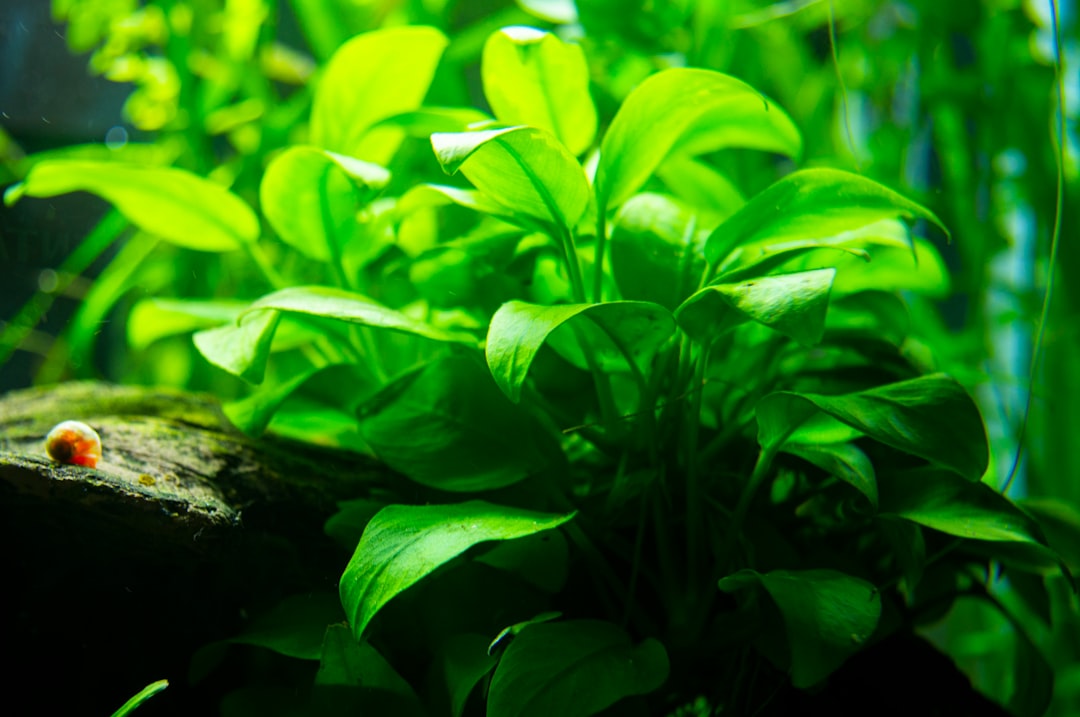
- Standard Java fern — broad, tongue-shaped leaves. The classic. Cheapest and most widely available.
- Narrow-leaf Java fern — thinner leaves, more delicate appearance. Slightly slower growth.
- Java fern Windelov — crinkled, tri-lobed leaf tips (“Bolbitis-like”). Aesthetic favourite.
- Trident Java fern — three-lobed narrow leaves throughout. The most sought-after variety; £8–£15.
Where to buy in the UK
- Amazon UK: Java fern portions — reliable, £4–£8 for a decent-size portion, delivered in 2–3 days.
- Maidenhead Aquatics and most independent UK aquatic shops stock it in tissue culture cups (£6–£10) or as loose plants on wood (£10–£20).
- UK aquascape specialists (Aquarium Gardens, Aqua Essentials) sell larger specimens and rarer varieties.
Watch out for: plants sold in transparent gel media are “tissue culture” — they’re 100% aquatic-grown, no pesticides, and safe to use in shrimp tanks. Plants sold “on wood” are typically shop-grown emersed (above water) and take 2–3 weeks to transition underwater — expect a few leaves to melt in that time.
How to plant (or rather, attach)
Java fern’s rhizome — the horizontal woody stem the leaves grow out of — cannot be buried in substrate. Bury it and the rhizome rots and the whole plant dies. This kills more first Java ferns than every other problem combined.
The correct approach: attach the rhizome to a hard surface (wood or rock) so the roots dangle and grow into the surface texture over time.
Method 1 — Superglue (fastest, easiest)
- Get aquascape cyanoacrylate super glue gel. NOT liquid superglue — the gel form cures on contact with water instead of dripping.
- Take your Java fern portion. Trim off any old dead leaves or damaged roots.
- Pat the underside of the rhizome dry with kitchen roll.
- Apply a small blob of gel to the underside of the rhizome (never the leaves or roots).
- Press firmly onto a piece of wood or rock for 30 seconds.
- Place in the tank. Cured glue is aquarium-safe within minutes.
Total time: about 5 minutes. Java fern will attach naturally over 4–8 weeks; the glue holds it in place while the roots grow into the wood texture.
Method 2 — Cotton thread
- Position the rhizome against wood/rock.
- Wrap dark cotton thread (not fishing line — it’s abrasive) around the rhizome multiple times to hold it in place.
- The plant attaches within a month. The cotton biodegrades over 3–6 months.
Slightly slower and more fiddly, but no cost.
Method 3 — Wedge into rock crevice
Some rocks (Seiryu, dragon stone) have natural crevices. Simply wedge the rhizome into a crevice, orient roots downward, and leave. Works well for the smaller “Java fern Windelov” variety.
Positioning in the tank
Java fern can go anywhere in the tank but performs best when:
- Not directly under the light — very bright light gives brown “green spot algae” spots on leaves.
- In moderate water flow — completely still water leads to detritus settling on leaves. Some current is good.
- Mid to background — the tall variety grows to 30+ cm, ideal for background scapes.
- In front of powerheads/filter outputs at diffused distance — likes flowing water indirectly.
Water and lighting
Java fern tolerates almost anything UK tap water throws at it.
- pH 6.0–8.0 — soft or hard water both fine
- Temperature 20–28°C — even survives brief cool spells
- Nitrate 0–80 ppm — grows better at lower nitrate but tolerates higher
- Chlorine — always dechlorinate with Seachem Prime or your usual conditioner
Lighting: low to moderate. A basic aquarium LED bar at 6–8 hours per day is ideal. Under high-intensity planted-tank lighting, Java fern develops brown spots and algae — it prefers to be in the darker regions of the tank.
CO2: unnecessary. Java fern will slowly increase growth rate with pressurised CO2, but for beginners it’s a hard-to-justify investment for one plant.
Fertiliser: minimal. Java fern absorbs nutrients directly from the water column via its leaves. A weekly dose of an all-in-one liquid ferts provides everything it needs. Do NOT insert root tabs near Java fern — the roots aren’t in substrate, and unused root tabs pollute the tank.
Propagation — you get more Java fern for free
Java fern is one of the easiest plants to propagate. Three ways it happens:
1. Adventitious plantlets on old leaves
When a Java fern leaf ages, it develops small brown spots on the underside — actually plantlets (baby plants) growing on the leaf tissue. Given 4–8 weeks, these plantlets grow their own roots and leaves. Break them off the parent leaf when they have 2–3 leaves each and attach them to new wood or rock as above.
This is the natural way Java fern reproduces. Every established Java fern will eventually cover itself in baby plants — free multiplication.
2. Rhizome division
If your Java fern grows into a large clump, cut the rhizome into pieces (each piece needs at least 2–3 leaves and some roots). Each piece attaches independently and grows into a new plant.
Use aquascape scissors, not tearing — clean cuts heal better.
3. Fallen plantlets
Sometimes plantlets fall off before you notice. They settle on the substrate and — remarkably — root themselves into whatever they land on (wood, rock, sometimes gravel). Look around your tank for surprise Java fern growth.
Common problems
Brown/black spots on leaves
Usually one of three things:
- Old leaves. Java fern leaves have a lifespan of 6–18 months. Old leaves turn brown from the tip inward and eventually drop off. Prune them (cut at the base) if aesthetically bothersome — the plant keeps growing new leaves at the rhizome.
- Excess light. Java fern is a low-light plant. If the tank is very bright, black spot algae (green spot algae, technically) develops on the leaves. Reduce photoperiod to 6 hours, or move Java fern to a shadier position.
- Adventitious plantlets developing. Not a problem — these are baby plants. Wait, then propagate. See section above.
Leaves melting after purchase
Expected if the plant was shop-grown emersed. Some leaves die; new leaves grow in submerged. Takes 4–6 weeks. Don’t remove the plant — it’s transitioning, not dying.
Rhizome rotting
This is the fatal error. If you buried the rhizome in substrate, it rots and the plant dies within weeks. Uproot immediately, cut off the rotted portion, and re-attach the surviving portion above substrate on wood or rock.
Also: if the tank has high organic waste (rotting food, dead fish behind decor), rhizomes can rot from the outside. Fix water quality (see our cloudy water guide for causes) and clean the plant.
Yellowing leaves
Usually iron or potassium deficiency. Weekly liquid ferts fix it within a fortnight. If persistent, upgrade to a comprehensive planted-tank fertiliser — Tropica Plant Nutrition is a UK-available option.
Algae growing all over Java fern
Usually caused by too much light + high nutrients. Standard fix: reduce photoperiod to 6 hours, do more water changes, add nerite snails or Amano shrimp to clean the leaves. See our aquarium algae guide for a fuller treatment.
Tank mates
Java fern is safe with everything. No fish, shrimp or snail we know of will eat it (the leaves taste bitter). Confirmed safe with:
- Bristlenose plecs — the ultimate “will it eat the plants?” test. See our ancistrus guide.
- Silver dollars — usually eat any live plant. Not Java fern.
- Goldfish — the plant-destroying menace. Ignores Java fern.
- Buenos Aires tetras, tinfoil barbs — plant nippers. Not Java fern.
The rare exception is very aggressive rasping species (some plecs specifically bred for wood-eating like Panaqolus) but this is edge-case territory.
Aquascape ideas
Java fern is versatile. Some classic uses:
- Bonsai tree effect — attach small pieces of Java fern to the “canopy” of a piece of bonsai-shaped wood.
- Backdrop wall — attach many pieces along a piece of driftwood at the back of the tank, creating a leafy green wall.
- Foreground focal point — a single Java fern Windelov on a hardscape centrepiece.
- Nano cube plant — trident or narrow-leaf Java fern in a 30–40L nano tank looks lush without overwhelming.
Bottom line
If you’re starting a first planted tank, buy Java fern as one of your first plants. Attach to wood, forget about it for 6 weeks, come back to find it’s put out new leaves and started making plantlets. Total maintenance: near zero.
Add Anubias and Amazon frogbit alongside for a bulletproof low-tech planted tank.
Related: Best aquarium plants for UK beginners, DIY CO2 for planted aquariums, how to lower nitrate in a fish tank (plants help), cherry shrimp care (Java fern’s biggest fan).
— Jaqline Smalling, FishForever
Leave a Reply