
Almost everything a UK shop is likely to tell you about bettas is wrong. They can live happily in a jar. They only need a small bowl. They’re a starter fish for children. They’re aggressive and can’t live with anything else. All of it is either wrong or half-right in ways that get bettas killed.
This guide is what we wish we’d read before buying our first betta. It’s UK-specific — litres and Celsius, UK-available products, UK aquatic shops — and it’s honest about the trade-offs. Kept properly, a male betta is one of the most rewarding fish in the freshwater hobby. Kept badly, they suffer for months.
This article contains affiliate links. If you buy through one of them, FishForever earns a small commission at no cost to you. We only recommend products we’d use ourselves. See our Affiliate Disclosure.
What a betta actually is
Betta splendens — the Siamese fighting fish. Native to the shallow, warm, still or slow-moving waters of Thailand, Cambodia, and Vietnam: rice paddies, ditches, floodplains. Bright, personality-filled, and equipped with a labyrinth organ that lets them breathe atmospheric air — which is why they survive in low-oxygen water where other fish would die.
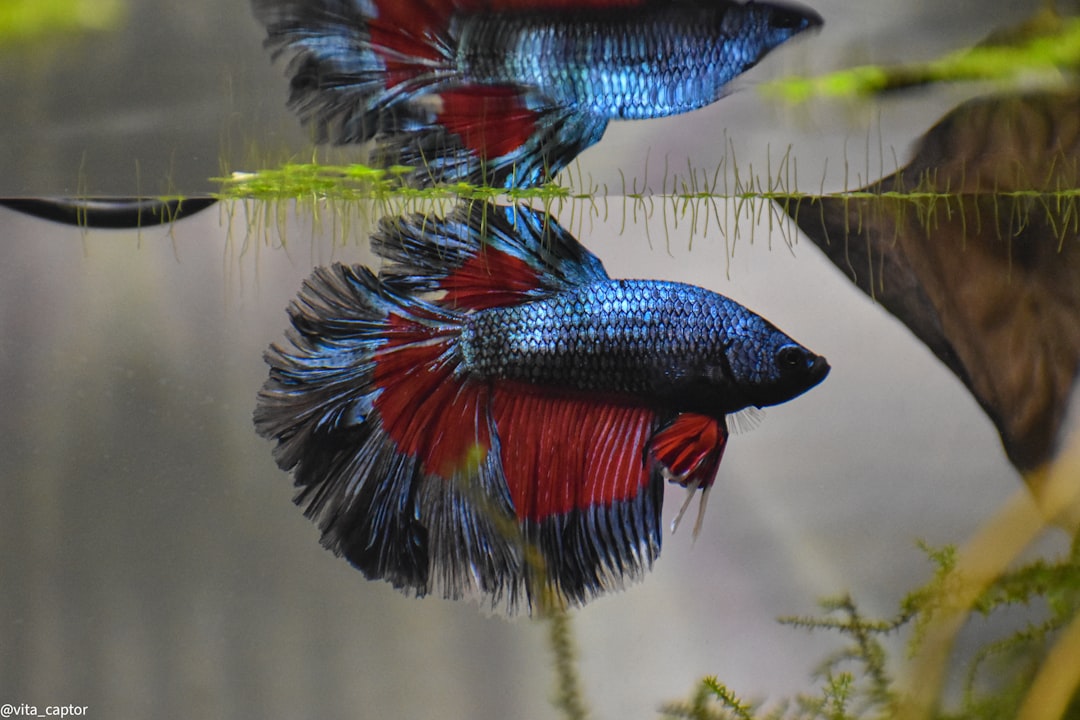
The species in the wild is drab. The bettas sold in UK shops are hundreds of generations of selective breeding for colour and finnage: veil-tails, crown-tails, half-moons, plakats, dragons, koi bettas, giant bettas. The care is the same across all fin types, though long-finned varieties need slower water flow.
Quick facts
- Scientific name: Betta splendens
- Adult size: 6–8 cm (some giants to 10 cm)
- Lifespan: 2–4 years in good conditions; 5+ years documented in exceptional care
- Water temperature: 24–28 °C
- pH: 6.5–7.5 (prefer slightly acidic)
- Water hardness: soft to medium (3–15 dGH)
- Minimum tank size: 20 litres for a single betta, though 40+ is meaningfully better
- Social: One male per tank. Females can sometimes be kept in sororities (5+) but it’s not for beginners.
Tank size — the “myth of the small tank”
The single biggest piece of misinformation about bettas is that they’re happy in tiny tanks. This comes from three places:
- Pet-shop staff who sell “betta cups” and 5-litre “betta bowls” and need to justify the product.
- Anecdotal evidence — bettas survive small tanks longer than other fish because of that labyrinth organ. Survival isn’t thriving.
- Genuine confusion — wild bettas do live in shallow ditches, but those ditches are metres long. The water is shallow; the swimming space isn’t tiny.
The correct floor for a UK betta tank is 20 litres. That’s what UK welfare organisations recommend, what breeders keep individual bettas in, and what any experienced fishkeeper will tell you. 40 litres is meaningfully better — more stable water chemistry, more swimming space, room for tank mates and live plants. A 20-litre nano tank or 40-litre setup is the right starting point.
Anything under 20 litres is not a betta tank. It’s a display case that’s slowly killing the fish.
Tank setup
Filter. Bettas need clean water but hate strong flow. Their long fins get pushed around by any decent-sized filter, which stresses them and can cause fin damage. Options that work:
- Sponge filter with an air pump — the ideal. Gentle, safe, effective.
- Small internal filter (Fluval U1) with the flow turned down or a pre-filter sponge over the outflow.
- Never a high-flow canister without a spray bar diffusing the current.
Heater. UK ambient temperatures are too cold for bettas year-round. You need a thermostat-controlled aquarium heater — a 25W for 20-litre tanks, 50W for 40-litre. Cheap unregulated heaters are a fire risk and cook fish in summer.
Substrate. Sand or fine gravel. Bettas don’t dig but they do rest on the bottom; sharp gravel can nick their fins.
Plants. Live plants matter for bettas more than for most fish. They provide surfaces to rest on near the surface (bettas rest a lot), they absorb nitrogenous waste, and they create the dim, dappled light bettas prefer. Good beginner plants:
- Java fern — attaches to wood, no substrate needed
- Anubias nana — same
- Cryptocorynes — root plants, tolerant of low light
- Floating plants (Amazon frogbit, red root floater) — bettas love resting under floating plants
Lighting. Moderate. Bettas find bright light stressful. Dim LEDs, plants filtering the light, or shorter photoperiods (6–8 hours) work well.
Cover. Bettas jump. Every betta tank needs a lid or cover. Even a small gap around cables is enough — cover it.
Extras that improve life meaningfully:
- Indian almond leaves (catappa) — release tannins that tint the water golden-brown, gently lower pH, and have mild anti-bacterial properties. Betta breeders swear by them. One or two leaves per 30 litres, replaced monthly.
- Betta hammock or floating rest — bettas rest near the surface constantly.
- Dark substrate — deep colours make betta colours pop.
Water chemistry
Cycle the tank properly first — see our UK cycling guide. Bettas are hardier than most tropicals against ammonia (labyrinth organ again) but that doesn’t mean putting them in uncycled tanks is OK. It means they suffer more visibly before dying.
Target after cycling:
- Ammonia: 0 ppm
- Nitrite: 0 ppm
- Nitrate: under 20 ppm — bettas are more sensitive to nitrate than most fish
- Temperature: 25–27 °C, stable
- pH: anywhere in 6.5–7.5, stable. UK tap water is often neutral to slightly alkaline — fine for bettas without adjustment.
Test weekly with an API Freshwater Master Test Kit. Weekly 25% water changes with Seachem Prime-dosed dechlorinated water at matching temperature.
Feeding
Bettas are obligate carnivores. Insect and crustacean prey in the wild. Their gut is short and they cannot process vegetable matter efficiently — flake foods designed for community tanks are actively bad for them long-term.
Daily:
- Hikari Betta Bio-Gold pellets — the gold-standard betta pellet. 2–3 pellets, twice a day. That’s it.
- OR Fluval Bug Bites for bettas — insect protein based, high quality.
2–3 times a week as variety:
- Frozen bloodworm (2–3 cubes’ worth per feeding)
- Frozen brine shrimp
- Frozen daphnia — helps with constipation, worth having on hand
Weekly fasting day. Bettas evolved to feed opportunistically and their guts do better with occasional rest. One day per week with no food is healthy, not cruel.
Never flake food (leaves them constipated), never feed for longer than they’ll eat in 2 minutes, never assume “one more pellet won’t hurt.” Overfeeding is the leading cause of swim bladder disease and shortened lifespan in captive bettas.
Tank mates — the honest version
The common wisdom is bettas can’t have tank mates. That’s an oversimplification. The accurate version:
- Male bettas cannot cohabit with other bettas — they will fight, and often to death.
- Long-finned males cannot cohabit with fin-nippers — tiger barbs, serpae tetras, some danios will nip fins constantly.
- Bettas cannot cohabit with fish that look like bettas — anything with bright colours and long flowing fins gets attacked. Guppies (especially fancy males), male endlers, cross-species with similar body shape.
Tank mates that work in a 40L+ betta tank (individual betta temperament varies — introduce with caution and be prepared to rehome):
- Female-only livebearer groups (guppies-only females, endler females)
- Corydoras — hardy species like paleatus, aeneus. Bottom feeders, safe
- Otocinclus catfish — peaceful algae eaters, fin-safe
- Snails — nerite snails, mystery snails. Zero conflict
- Cherry shrimp — see our guide — some individual bettas will hunt shrimp, others ignore them. Test with cheap adult shrimp first.
- Kuhli loaches — our kuhli guide covers them. Nocturnal, out of the betta’s swimming zone.
- Ember tetras, chili rasboras (in schools of 6+) — some bettas tolerate small nano-schoolers; some don’t.
Introduce tank mates by moving the betta to a temporary container for an hour, adding the new fish, then re-adding the betta last. Reduces territorial aggression. Watch for the first 48 hours; be prepared to separate.
The betta sorority question
Female bettas can, sometimes, be kept in groups called sororities. Not for beginners.
Requirements: 60+ litre tank, dense planting, 5+ females (never 2 or 3 — they’ll bully the weakest), all added simultaneously. Even then, sororities frequently break down after months and require rehoming. If you want colourful community fish, buy neon tetras. If you specifically want female bettas, be prepared for the possibility of failure.
Common health problems
Fin rot. Very common in bettas because of their long fins. Fin edges fray, blacken, or turn white. First fix water quality (test, do a 50% change), then treat with NT Labs Anti-Fin Rot & Fungus or Waterlife Myxazin. Full protocol in our fin rot guide.
Ich (white spot). Same as any tropical. Treat with heat + salt, or eSHa EXIT which is safe with sensitive species. See our ich treatment guide.
Swim bladder disease. Betta floats sideways or upside down, or sinks. Usually caused by overfeeding — bettas are prone. Fast for 2–3 days, then feed a piece of blanched pea (skin removed, mashed). Persistent cases: treat with Waterlife Myxazin.
Velvet. Fine gold dust across the body, breathing fast, hiding. Serious. Treat with Waterlife Protozin or a copper-based velvet treatment. Dim the lights during treatment.
Fin-biting. Some bettas — particularly long-finned varieties in small tanks — chew their own fins from stress or boredom. Enrichment (more plants, floating rest, occasional live food) helps. Upgrading tank size helps. There’s no medication that fixes psychological fin-biting.
Buying a betta — where to actually get one
UK aquatic shops vary wildly in betta welfare. What to look for:
- Bettas in individual tanks with heaters — not cups on a shelf
- Water clean, temperature warm to the touch — a betta cup at room temperature has cold-shocked the fish
- Fins alert, colour vivid — not clamped, not hiding
- Actively responsive to your finger near the glass
Avoid:
- Bettas in “betta cups” at big-box pet chains, unheated. These fish are usually already stressed and often ill.
- Any betta with a bulging stomach (constipation or internal parasites) or a flat belly (starvation).
- Bettas with damaged fins beyond mild ragged edges — usually indicates crowded shop tanks.
Better sources in the UK:
- Independent aquatic shops that keep bettas in filtered, heated systems
- UK betta breeders — several excellent ones sell direct via Facebook groups and forums
- Specialist events like the FBAS (Federation of British Aquatic Societies) shows
Expect to pay £5–£8 for a standard veiltail, £10–£20 for fancier types (crowntails, halfmoons, plakats), £25–£60 for imported grand-champion strains.
Bottom line
Bettas kept in a properly-set-up 20–40 litre planted, filtered, heated tank live 3–4 years, show off constantly, recognise the person who feeds them, and are one of the most personable fish in the freshwater hobby. Bettas kept in “betta bowls” from big-box pet chains typically die within 6 months.
The difference is £50–£100 in initial equipment and about 15 minutes of tank maintenance a week. It’s not much to save the fish.
Setting up a betta tank from scratch? Cycle it properly first — this matters more than any decor choice. Considering tank mates? Cherry shrimp and kuhli loaches are the two safest options.
— Jaqline Smalling, FishForever
Leave a Reply