
Mollies get sold as beginner livebearers alongside guppies and platies. They’re not the same fish, and they’re not equally forgiving. A tank set up for guppies will kill mollies within months. This guide covers what mollies actually need, why so many die young in UK community tanks, and how to get them right if you choose to keep them.
They’re worth the extra effort. Adult mollies are handsome, sensible-sized (10–12 cm for sailfins), peaceful, and — once their tank is set up properly — self-sustaining. They also occupy a slightly higher-brow position in the hobby than guppies, and a well-run molly tank turns heads.
This article contains affiliate links. If you buy through one of them, FishForever earns a small commission at no cost to you. We only recommend products we’d use ourselves. See our Affiliate Disclosure.
Species and varieties
“Molly” covers several closely-related livebearers of the genus Poecilia. The most common in UK shops:
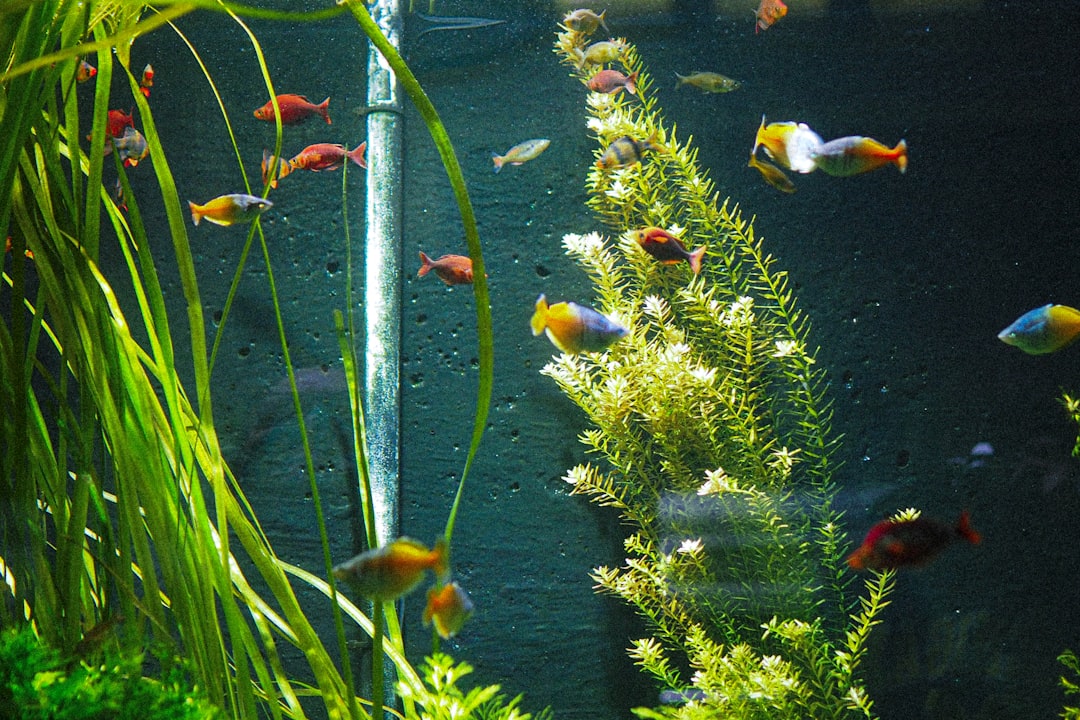
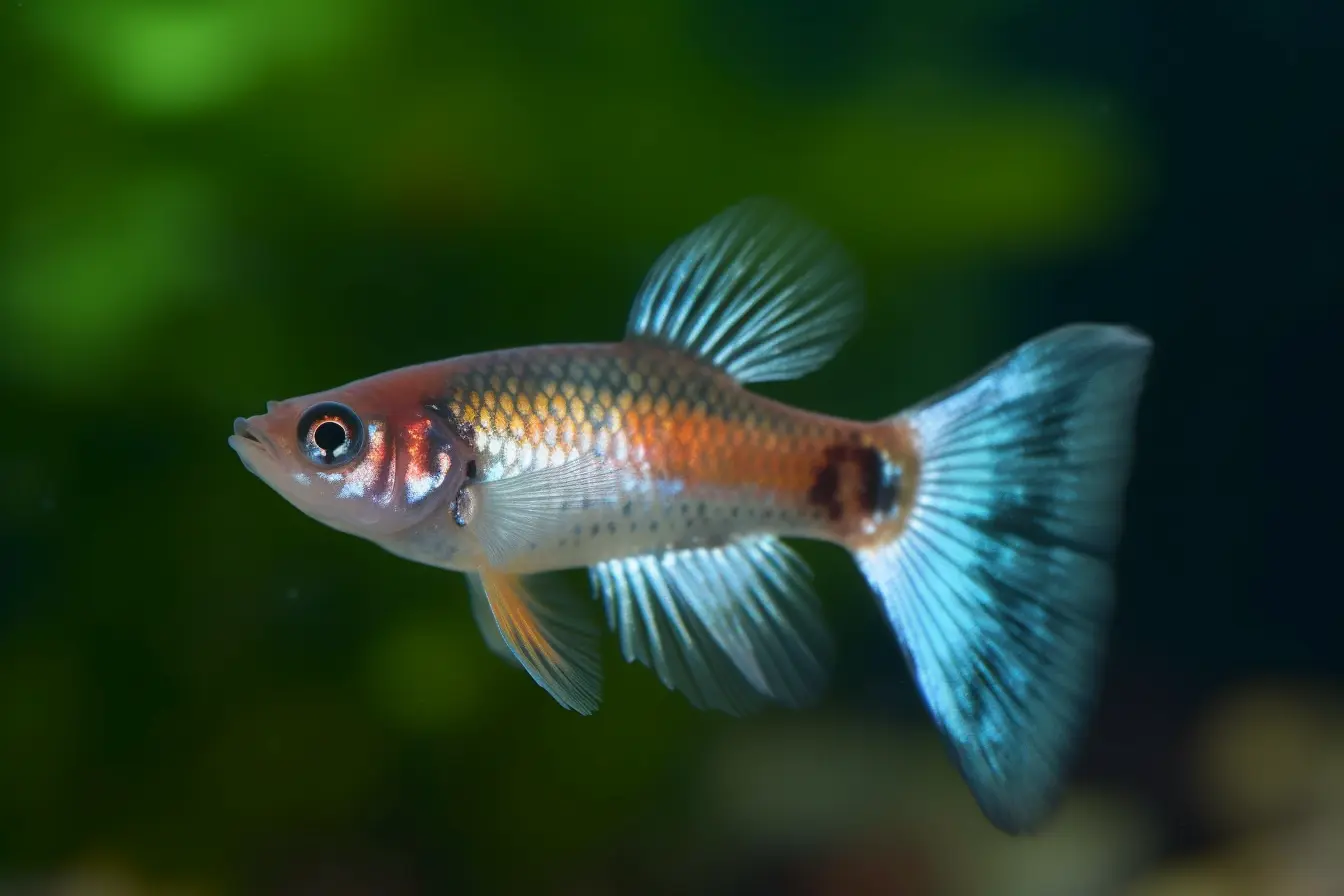
- Common short-finned molly (Poecilia sphenops) — the base species. Black mollies, dalmatian mollies, silver mollies, orange mollies are all colour morphs of this. Adult 8–10 cm.
- Sailfin molly (Poecilia latipinna) — larger, with a magnificent extended dorsal fin on males. Adult 12–15 cm. More demanding of tank size and water quality.
- Yucatan molly (Poecilia velifera) — largest, adult males to 15 cm with huge dorsal fins. Uncommon in UK trade.
- Balloon molly — deliberately-bred spinal deformity of the common molly, resulting in a shortened body. Widely sold. Widely regarded as an animal-welfare concern (compressed organs, shorter lifespan, breathing difficulties). We do not recommend buying balloon mollies.
The three legitimate species interbreed readily, so many pet-shop “mollies” are hybrid stock of uncertain lineage. This affects predictable adult size less than you’d think.
Quick facts
- Adult size: 8–15 cm depending on species
- Lifespan: 3–5 years typical
- Water temperature: 24–28 °C
- pH: 7.5–8.4 — mollies need alkaline water, this is non-negotiable
- Water hardness: hard to very hard — 15–30 dGH ideal
- Minimum tank size: 90 litres for common mollies, 120 litres for sailfins, 150 litres for Yucatan or a big male sailfin group
- Stocking: 2 females per male, in groups of at least 4–5
Water — the whole game
The reason so many mollies die in UK tanks is water chemistry. Guppies and platies are more forgiving; mollies are not. If your tank runs at pH 7.0 with soft water, mollies will slowly deteriorate — clamped fins, shimmying (twitching in place), fungal outbreaks, early death.
Molly water:
- pH 7.5–8.4. Above 8 is fine; below 7.2 is stressful; below 7.0 is fatal in the medium term.
- KH (carbonate hardness) 8+. This is what stops pH crashing.
- GH (general hardness) 15–30 dGH. Soft water areas of the UK (Scotland, Wales, parts of the Southwest and Lancashire) will need to raise hardness deliberately. Hard-water areas (London, the Home Counties, Yorkshire) usually have suitable tap water already.
To raise hardness in soft water: crushed coral (in the filter or as substrate), aragonite substrate, or a commercial mineral additive (Seachem Equilibrium, Salty Shrimp GH+/KH+). Regular limestone or dolomite gravel also works.
The salt question
The internet is divided on whether mollies “need” brackish water. The evidence:
- Wild sailfin and Yucatan mollies inhabit brackish coastal waters as well as pure freshwater.
- In captivity, mollies live full healthy lives in pure freshwater provided the water is alkaline and hard.
- Some UK keepers add 1 teaspoon of aquarium salt per 4 litres to firm the fish up. Others don’t. The evidence is that in properly hard, alkaline water, salt is not necessary. In borderline water it helps.
Practical recommendation: get the pH and hardness right first. Only add salt if you’re still seeing signs of stress (shimmying, clamped fins) after the pH and hardness are correct. Do not attempt to keep mollies with pure freshwater tank mates and dose salt — most soft-water species (tetras, corydoras) don’t tolerate it.
Tank setup
- Length matters. Sailfin males in particular need swimming distance. Minimum tank length 90 cm for a group.
- Filtration with moderate flow. Standard internal or external at 4–6× tank volume per hour turnover.
- Substrate: aragonite or crushed coral for hardness maintenance in soft-water areas; standard sand or fine gravel in hard-water areas.
- Planting: Vallisneria (loves hard alkaline water), Java fern, Anubias, Cryptocorynes tolerant of higher pH. Soft-water plants (Rotala, Ludwigia, most stem plants) will melt.
- Cover: loose lid. Mollies rarely jump but occasional accidents happen.
Sexing
Very easy once past 3 months:
- Male: modified anal fin — the gonopodium, a thin rod pointing back and slightly to the side. In sailfins, males also develop the enormous dorsal fin over the first year.
- Female: normal fan-shaped anal fin. Larger, deeper-bellied.
Stocking ratio: 2 females per male. A single female with a single male is bullied constantly and will be exhausted by continuous mating attempts.
Feeding
Mollies are omnivorous but more herbivorous than most livebearers. They graze on algae constantly in the wild — soft green algae on rocks, wood, and plants. In captivity that means:
- Vegetable content daily. Algae wafers, spirulina flakes, blanched courgette, blanched spinach, cucumber. Sinking algae wafers overnight, then removed in the morning.
- Standard tropical flake with vegetable content (Tetra Prima, JBL NovoBel, Hikari Tropical).
- Frozen or freeze-dried food — bloodworm, brine shrimp, daphnia — 2× a week.
- Leave some algae growth on the back of the tank. Mollies pick at it constantly.
Overfed mollies get fat and lazy. Underfed mollies pick constantly at plants and other fish. Feed twice a day, only what they clear in three minutes.
Tank mates
Choose fish that also want alkaline hard water. This is where mollies genuinely conflict with a lot of UK community stocking.
Compatible:
- Other livebearers (guppies, endlers, platies, swordtails, sailfin mollies)
- Rainbowfish (Boesemani, red rainbows, dwarf neon)
- Congo tetras (tolerate hard water)
- Cherry barbs, gold barbs (tolerant of higher pH)
- African cichlids (though not the aggressive Rift Lake ones)
- Bristlenose plecos — as covered in the ancistrus guide
- Corydoras — hardy species like paleatus and aeneus tolerate hard water well
- Ghost shrimp and Amano shrimp (but adults will eat babies)
Incompatible:
- Neons, cardinals, most classic soft-water tetras — they’ll suffer in hard alkaline water
- Discus, angelfish (soft-water species)
- Rams, apistogramma (soft-water)
- Kuhli loaches (prefer softer, slightly acidic water)
- Bettas (aggression risk in both directions, and the water is wrong for bettas)
Breeding
Mollies breed on their own the moment you put males and females together. Gestation is 28–35 days. A single female produces 20–60 fry per cycle, more with age. She can store sperm for months — a single mating produces multiple broods.
To raise fry successfully:
- Dense floating plants (hornwort, water sprite) give fry places to hide.
- Well-fed adults are less predatory. Feed the tank generously in the days after birth.
- Fry are large — 8–10mm at birth, take crushed flake immediately. Baby brine shrimp accelerates growth.
- Move heavily-pregnant females to a mesh breeding net (not the rigid plastic kind — too small and stressful) if you want higher survival rates.
At 2–3 cm, fry are safe from most adult tank mates. At 3–4 cm, they’re sexable and homeable. Most UK aquatic shops will take healthy fry as store credit, especially good-colour sailfins and dalmatians. Expect 30–80p per fish.
The genetics problem
Modern fancy strains — balloon mollies, black lyretail sailfins, some intense-colour dalmatians — have been selectively bred for appearance to the detriment of health. Common issues:
- Shortened lifespans (1–2 years vs 3–5 for wild-type stock)
- Compressed spines and swim-bladder problems
- Poor immune systems, susceptible to disease
- Sterility (some fancy strains) or reproductive difficulties
If you can find “common” molly stock (silver, dalmatian, orange without balloon-body deformity), it will outlive fancy strains by years. Independent aquatic shops in the UK are better sources than big-box pet chains for this.
Common problems
Shimmying (twitching in place, holding still but vibrating). Classic sign of unsuitable water. Fix pH and hardness before anything else.
Fungal patches on body or fins. Usually secondary to stress from wrong water chemistry. Fix water first, then treat with UK antifungal (NT Labs, Waterlife Myxazin).
Emaciation despite feeding. Likely internal parasites. Treat with Sera Tremazol or a similar UK antiparasitic.
Aggressive males biting each other. Not enough females, or too small a tank. Add females or upgrade tank.
Bottom line
Mollies are lovely fish in the right setup and slow deaths in the wrong one. Hard alkaline water, larger tanks than guppies, and generous vegetable feeding. Get those right and they’re a long-lived, rewarding fish. Get them wrong and you’ll spend a year losing them and not knowing why.
Products mentioned in this article
Amazon UK links. Prices and stock change; we recommend checking a couple of independent UK aquatic shops for comparison before buying.
Not sure you have hard enough water? UK water hardness data by postcode is available from your water supplier (search “[your area] water hardness”). Setting up an alkaline tank? Cycle it properly first. Working out stocking numbers? Volume calculator.
— Jaqline Smalling, FishForever
Leave a Reply