
Tropical fish keeping may seem to be all about fish, but in reality, it’s about bacteria
For many people, their fish-keeping experience begins with buying a tank, a stand, a filter, a hood, lights, plants, rocks, and a diver with genuine bubbles. They add water that has been carefully dechlorinated and brought up to temperature. Then, they make their first (and biggest) mistake: they buy some fish. This might happen a week later, but unless there are leaks or malfunctions in any of the equipment, leaving the tank to stand for a week doesn’t achieve much.
The problem is ammonia. Fish pee is ammonia, and their poop breaks down to ammonia too. Before long, the new fish are swimming in a toxic pool of ammonia. Tragically, ammonia is deadly poisonous to fish. It inhibits their breathing, much like carbon monoxide does in humans, and they slowly begin to suffocate. Don’t believe anyone who says there’s a “safe” level of ammonia for fish. There might be a safe level of carbon monoxide, but I wouldn’t rent a house that has it!
To avoid this issue, it’s important to understand the role of bacteria in fish-keeping. Certain types of bacteria can break down ammonia into a less toxic substance called nitrite. After a few days, these “ammonia-eating” bacteria start to grow in the tank, particularly in the filter and gravel, and drop the ammonia levels to zero. That’s where the beneficial bacteria come in – they break down nitrite and turn it into nitrate. Nitrate is only harmful in high levels, which can be controlled by regular partial water changes, and is useful to aquatic plants as a fertilizer. This process is called the nitrogen cycle, and a tank where the bacteria are happily munching on ammonia and nitrite is said to be “cycled.”
Traditionally, people would put a couple of tough fish in their new tank and wait eight weeks before adding more fish, allowing the bacteria to grow. However, even if the fish survive, they have to endure weeks of ammonia and nitrite poisoning. Fishless cycling is a better way, which effectively grows the bacteria before any fish are harmed. By the time the ammonia and nitrite readings are zero, there will be plenty of beneficial bacteria to break down the waste from as many fish as desired.
Beneficial Bacteria
Your bacteria play a crucial role: certain types of bacteria can break down ammonia into a less toxic substance called nitrite (that’s with an ‘i’ – note the spelling, it’s important), also known as NO2-. After a few days, these “ammonia-eating” bacteria begin to grow in your tank, particularly in your filter and gravel, and reduce your ammonia levels to zero. Phew! But your fish aren’t completely safe yet: nitrite is less toxic than ammonia, but it can still kill fish. Fortunately, another type of bacteria starts to grow in your filter and gravel, albeit a little more slowly than the “ammonia-eating” bacteria. This beneficial bacteria breaks down nitrite (NO2-) and converts it into nitrate (NO3+) – note the ‘a’. Nitrate is only harmful in high levels, which can be controlled by regularly changing the water partially, and is useful to aquatic plants as a fertilizer. This process is called the Nitrogen Cycle, and in fish-keeper’s jargon, a tank where the bacteria are happily breaking down ammonia and nitrite is said to be “cycled”.
How to save the day (and the fish) with an un-cycled aquarium
If you didn’t do Fishless Cycling or if you cleaned your matured tank and your fish are dying, and nothing is breaking down the ammonia and nitrite, here’s what you can do to give your fish the best chance:
- Immediately do a 10-15% water change with dechlorinated water and continue to do this at least once daily until your tank is cycling (i.e., ammonia and nitrite are at zero).
- Test the water daily for ammonia and nitrite until the values are holding at zero for several days running. If levels are high, do an immediate, extra water change.
- If possible, get some matured filter media and/or gravel from a matured tank and put it in your tank, suspended in an old stocking. This will hopefully impregnate your new tank with the beneficial bacteria. You can also use floss from a relative’s fish pond, but make sure that what you use is clean and free from pathogens.
- Keep good aeration in the tank both to help the fish and to oxygenate the beneficial bacteria.
- Avoid using medications, if possible, as many medications kill off beneficial bacteria. Your fish may well get ick, fungus, or other infections due to the stress of the ammonia and nitrite, but the priority is to get that water quality as good as possible.
- If you have delicate fish in the tank, such as plecos, corys, or other bottom dwellers, tetras, pencilfish, etc. try to re-home them temporarily, such as asking the Local Fish Shop to look after them until your tank is cycled (after all, chances are that they got you in this mess in the first place).
- Live plants can directly use ammonia, so if you can, put some cheap aquatic plants in the tank, such as elodea or giant vallis.
- Don’t feed your fish at all if your ammonia readings are high, and only feed bare minimum rations every other day until the tank cycles. This will cut down on the ammonia the fish produce. Since fish are cold-blooded creatures and don’t need the calories of a mammal, they can go several days without food anyway, and the occasional fast is good for them. Your fish may not be very hungry anyway, so be careful not to feed more than the fish can eat and clean up uneaten food immediately, before it rots and produces even more ammonia.
- Only clean the gravel superficially, of obvious dirt and uneaten food. You want the bacteria to colonize it and actually start to grow. Also, don’t swap out your filter at this point – if it gets blocked, just clean it enough to unblock it, in used tank water.
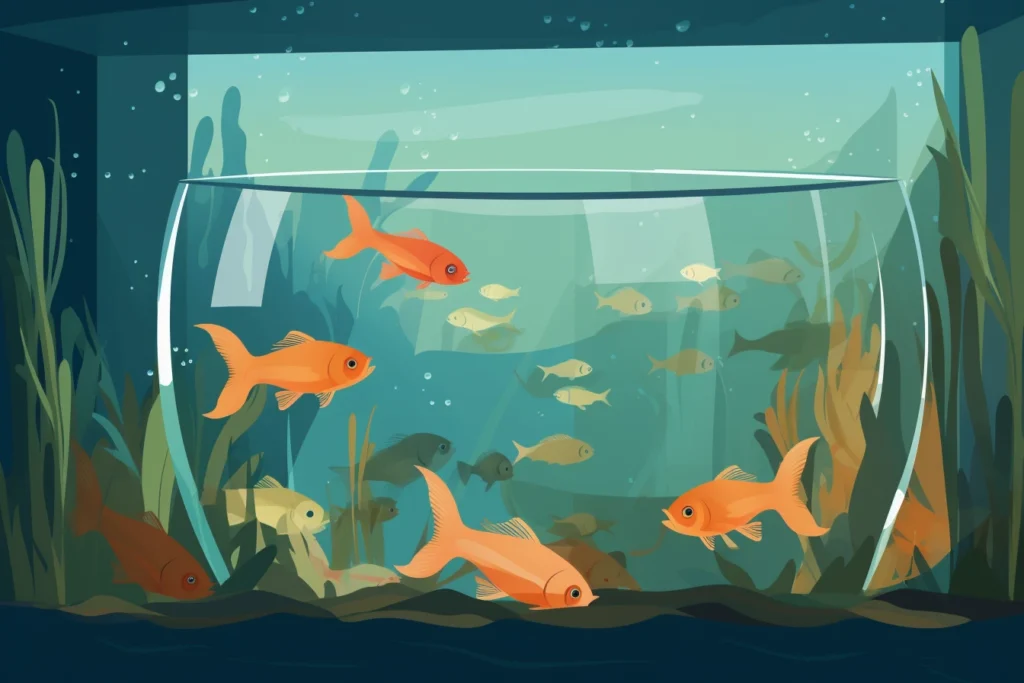
In summary: Fish waste produces ammonia, which is then converted into nitrite, and then into nitrate. These nitrates can be used by plants to grow.
Traditionally, the way to establish beneficial bacteria in a new tank is to add just a couple of really tough fish and wait for 8 weeks before adding more fish. Unfortunately, this method comes with risks. Even if the fish survive (which is a pretty big “if”), they have to endure weeks of ammonia poisoning and then nitrite poisoning. They may survive, but they may never enjoy good health or live as long as they should. Personally, I think it’s a welfare issue. However, there is a better way: Fishless Cycling. Click on this link and another to learn more about the technique. The advantage of Fishless Cycling is that it allows the bacteria to grow effectively before any fish are added. By the time your ammonia and nitrite readings are zero, you’ll have plenty of beneficial bacteria to break down the waste from as many fish as you like in your tank.
Traditionally, people would put a couple of tough fish in their new tank and wait eight weeks before adding more fish, allowing the bacteria to grow. However, even if the fish survive, they have to endure weeks of ammonia and nitrite poisoning. Fishless cycling is a better way, which effectively grows the bacteria before any fish are harmed. By the time the ammonia and nitrite readings are zero, there will be plenty of beneficial bacteria to break down the waste from as many fish as desired.
It’s important to understand the role of bacteria in fish keeping. Certain types of bacteria can break down ammonia into a less toxic substance called nitrite. These “ammonia-eating” bacteria start to grow in the tank after a few days, particularly in the filter and gravel, and drop the ammonia levels to zero. Beneficial bacteria break down nitrite and turn it into nitrate. Nitrate is only harmful in high levels, which can be controlled by regular partial water changes and is useful to aquatic plants as a fertilizer. This process is called the nitrogen cycle, and a tank where the bacteria are happily munching on ammonia and nitrite is said to be “cycled”.
Can a cycled tank un-cycle again?
Even in an established tank, you can experience ammonia or nitrite “spikes”. This is usually due to the loss of beneficial bacteria, which can happen for several reasons:
- You forgot to dechlorinate your water during a water change. Chlorine kills bacteria!
- You over-cleaned your tank, particularly the filter media and gravel. This is especially true if you didn’t dechlorinate your water, and if the gravel or filter were out of the water for a long time.
- Some filter companies recommend changing the filter media every month, but this is usually unnecessary and expensive. It also removes beneficial bacteria. If you want to replace a filter insert, leave the sponge or floss in the tank for a week or so beforehand.
- A power outage stopped your filter or pump from working for a couple of hours. Bacteria need oxygenated water to survive.
- You overloaded the bacteria in your tank’s ability to break down fish waste, for example, by suddenly adding too many fish, particularly messy ones.
- A tub of food has fallen into the tank and gone bad, overloading the beneficial bacteria’s ability to cope.
If you experience a spike in ammonia or nitrite levels, there are steps you can take to save your fish and get your tank back on track. Here are some things you can do:
- Immediately perform a 10-15% water change with dechlorinated water. Repeat this process at least once daily until your tank is cycling (i.e., ammonia and nitrite are at zero).
- Test the water daily for ammonia and nitrite until the levels are holding at zero for several days in a row. If levels are high, do an immediate, extra water change.
- If possible, get some matured filter media and/or gravel from a matured tank and put it in your tank, suspended in an old stocking. This can help establish beneficial bacteria in your tank. You can also use floss from a relative’s fish pond, but make sure it’s clean and free from pathogens.
- Keep good aeration in the tank to help oxygenate the beneficial bacteria and to assist the fish.
- Avoid using medications if possible, as many medications can kill off beneficial bacteria. The priority is to get your water quality as good as possible.
- If you have delicate fish in the tank, such as plecos, corys, or other bottom dwellers, tetras, pencilfish, etc., try to re-home them temporarily, such as asking the Local Fish Shop to look after them until your tank is cycled.
- Live plants can directly use ammonia, so if you can, put some cheap aquatic plants in the tank, such as elodea or giant vallis.
- Don’t feed your fish at all if your ammonia readings are high, and only feed bare minimum rations every other day until the tank cycles. This will cut down on the ammonia the fish produce. Fish can go several days without food, and the occasional fast is good for them.
- Only clean the gravel superficially, of obvious dirt and uneaten food. You want the bacteria to colonize it and actually start to grow. Also, don’t swap out your filter at this point – if it gets blocked, just clean it enough to unblock it, in used tank water.
Remember that cycling your tank is an important step in keeping your fish healthy and happy. Understanding the role of bacteria in fish keeping is crucial to keeping your tank free from harmful elements. By taking the necessary steps to avoid new tank syndrome and ammonia or nitrite spikes, you can enjoy a thriving aquarium for years to come.
How to Save the Day (and the Fish) with an Uncycled Aquarium
If you didn’t do fishless cycling or scrub out your matured tank and now your fish are dying, and nothing is breaking down that ammonia and nitrite, what do you do now? Here’s what I do to give my fish the best chance:
- Immediately do a 10-15% water change with dechlorinated water and continue to do this at least once daily until your tank is cycling (i.e. ammonia and nitrite are at zero).
- Test the water daily for ammonia and nitrite until the values are holding at zero for several days running. If levels are high, do an immediate, extra water change.
- If possible, get some matured filter media and/or gravel from a matured tank and put it in your tank. Suspend it in an old stocking. This will hopefully impregnate your new tank with the beneficial bacteria. One lady successfully used floss from a relative’s fish pond to colonize her new tank! (Make sure that what you use is clean and free from pathogens.)
- Keep good aeration in the tank to help the fish and oxygenate the beneficial bacteria.
- Avoid using medications, if possible, as many medications kill off beneficial bacteria. Your fish may get ick, fungus, or other infections due to the stress of the ammonia and nitrite, but the priority is to get that water quality as good as possible.
- If you have delicate fish in the tank, such as plecos, corys, or other bottom dwellers, tetras, pencilfish, etc., try to re-home them temporarily, such as asking the Local Fish Shop to look after them until your tank is cycled (after all, chances are that they got you in this mess in the first place).
- Live plants can directly use ammonia. So, if you can, put some cheap aquatic plants in the tank, such as elodea or giant vallis.
- Don’t feed your fish at all if your ammonia readings are high, and only feed bare minimum rations every other day until the tank cycles. This will cut down on the ammonia the fish produce. Since fish are cold-blooded creatures and don’t need the calories of a mammal, they can go several days without food anyway, and the occasional fast is good for them. Your fish may not be very hungry anyway, so do be careful not to feed more than the fish can eat, and clean up uneaten food immediately before it rots and produces even more ammonia.
- Only clean the gravel superficially, of obvious dirt and uneaten food. You want the bacteria to colonize it and actually start to grow. Also, don’t swap out your filter at this point – if it gets blocked, just clean it enough to unblock it in used tank water.
Frequently Asked Questions About New Tanks and Cycling
Why didn’t my Local Fish Shop (LFS) tell me any of this?
Good question. The answer is probably ignorance. People are shockingly ignorant of the Nitrogen Cycle, despite its importance in maintaining a healthy aquarium. In my opinion, more fish have died due to bad advice from local fish stores (LFS) than any other reason. While temperature and pH are often blamed, ammonia and nitrite are actually the more significant problems. When it comes to buying fish and aquarium products, trust no one. Double-check everything you are told and plan in advance.
The guy at the LFS sold me some “Instant Cycle” product that contains the beneficial bacteria. Do I still need to cycle my tank?
There are various bacterial products available on the market that claim to accelerate the process of cycling your tank (note: none of them claim to achieve instant cycling, regardless of what LFS employees may say). Personally, I am skeptical of their efficacy since bacteria require a source of ammonia and oxygenated water in order to thrive. Even if these bacteria can be held in some sort of “suspended animation”, they will still require time to colonize your gravel and filter. Colonization is a gradual process that cannot be rushed!
The LFS sold me a product that locks away ammonia. Can I use that to save my fish?
Dealing with ammonia in fish tanks can be tricky. While it’s important to remove it as quickly as possible, products that lock it away have significant drawbacks. Firstly, they can interfere with water test readings, which can either appear falsely negative or alarmingly high. Secondly, if the beneficial bacteria haven’t established themselves yet, and the ammonia levels continue to rise, the product may not be able to lock it away, causing a sudden and deadly spike that cannot be reliably tested for. Lastly, locked ammonia may not be available for the beneficial bacteria to use, potentially hindering their growth.
Why did my pleco die while my gouramis and danios were fine?
There is a significant difference between being “alive” and being “fine.” Nonetheless, the reason your pleco probably died is because it was less able to reach the tank’s top, where oxygen levels are highest and ammonia levels are a bit lower. Danios are known for their survival ability, as they swim near the top of the water (I believe they were even used in nuclear experiments in the 50s). Gouramis and bettas can breathe air directly through their labyrinth organ.
“The LFS guys” stated they had never heard of “Fishless Cycling” and they’ve been in fish-keeping for 40 years. They recommended cycling with danios. Can you explain why?
Fishless Cycling is a relatively new technique that has only been discussed since the advent of the Internet. It is a safer and more humane method that prevents fish from experiencing suffering and long-term health issues caused by subtle damage. Despite its benefits, people may be tempted to stick to what they know “works” without fully understanding the welfare implications or the advantages of cycling fishless.
I have a betta in a fish bowl. Can I cycle without a filter?
You certainly can (and should). Just follow the same procedure as for a larger tank – the bacteria should colonize your gravel. Since the bacteria really need oxygen to thrive, adding an air-pump with an air-stone, or better yet, a small tank filter of some kind, will improve conditions even further.
But my biggest problem is the algae that has taken over my tank!
Algae in an uncycled tank is a minor cosmetic issue that you can address later. While algae itself doesn’t harm fish, it can use ammonia directly. This is likely why tanks covered in algae are assumed to be unhealthy.
But I tested my water when I first set my tank up and it was fine!
Ammonia or nitrite won’t be present unless you have fish or an artificial source of ammonia, such as what you add during fishless cycling. It’s important to understand that the presence of ammonia and nitrite in a new tank can be deadly for fish. To avoid this issue, it’s recommended to cycle your tank before adding any fish. During the cycling process, certain types of bacteria will break down ammonia into nitrite and nitrate, making the water safe for fish. Fishless cycling is a better way to grow these beneficial bacteria before adding any fish, and it can prevent fish from enduring weeks of ammonia and nitrite poisoning.
Won’t carbon in my filter remove all the toxins anyway?
Carbon may temporarily remove some of the ammonia, but it won’t affect nitrite and its effects only last a few days. After that, everything can leach back into the tank again. There are no shortcuts to growing beneficial bacteria for cycling your tank, except for using a matured filter and gravel.
But it’s so boring waiting for my tank to cycle. Can’t I just add a couple of fish now?
If you’re feeling impatient, remember that it’s even less fun watching fish die. Instead, spend your time designing your “aquascape”, soaking your bogwood and rocks, establishing your plants, and checking that everything is working properly. Additionally, browse the internet and read up on the species you’d like to acquire, and check with local fish stores to see what they have in stock. Buying online is often cheaper and more convenient, so take some time to get to know your preferred outlets.
Yeah, but what exactly is “Cycling a Tank”?
“Cycling a tank” refers to the process of establishing a stable bacterial colony in an aquarium to break down harmful ammonia and nitrites into less harmful nitrates. This is essential for the health of the aquatic life within the tank. The process is known as the nitrogen cycle, and the term “cycling” indicates setting up and allowing this cycle to fully establish itself in a new aquarium.

Leave a Reply